Palram Canopia Harmony 6×8: Passive Solar Heating Methods to Extend Your Growing Season
For gardeners in temperate climates, the challenge of early frosts and late springs can cut the growing season short. The Palram Canopia Harmony 6×8 greenhouse is an excellent structure for harnessing the sun’s energy, but without strategic passive solar heating, you may waste its potential. This guide explores proven methods to collect, store, and distribute heat without electricity, helping you raise seedlings earlier and harvest into autumn.
How Does the Palram Canopia Harmony 6×8 Capture Passive Solar Heat Naturally?
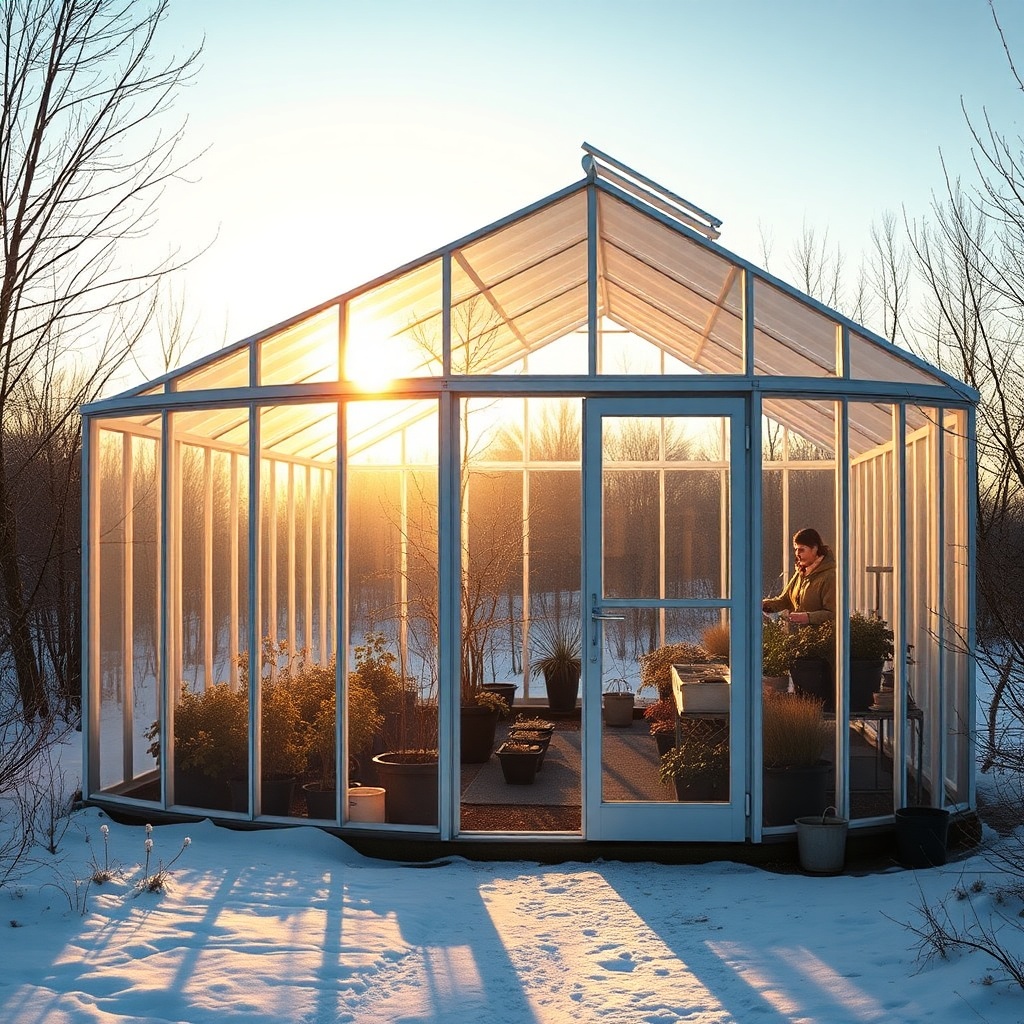
The Harmony 6×8 features 4mm twin-wall polycarbonate panels that act as a thermal blanket. These panels allow short-wave solar radiation to enter while trapping long-wave infrared radiation inside—a principle known as the greenhouse effect. The aluminium frame is lightweight yet rigid, preventing heat loss through drafts. With a footprint of roughly 6 by 8 feet (1.8 x 2.4 m), the interior volume is just right for warming with minimal supplemental heat. Properly oriented with the long side facing south, the structure can raise interior temperatures by 10–15 °F (5–8 °C) above ambient on sunny winter days, even below freezing outside.
To maximize this effect, ensure the panels are clean. Dust and algae reduce light transmission by up to 20%, directly lowering passive heat gain. For detailed care, read our guide on Palram Canopia Harmony 6×8: Proper Cleaning and Maintenance for Polycarbonate Panels.
What Thermal Mass Materials Work Best Inside a 6×8 Greenhouse?
Thermal mass absorbs heat during the day and releases it slowly at night, smoothing temperature swings. For the Harmony 6×8, water is the most effective and affordable medium.
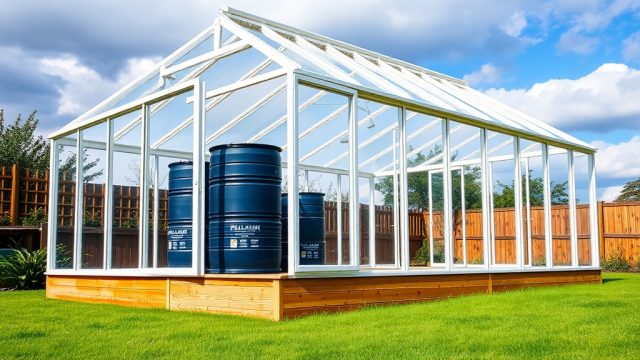
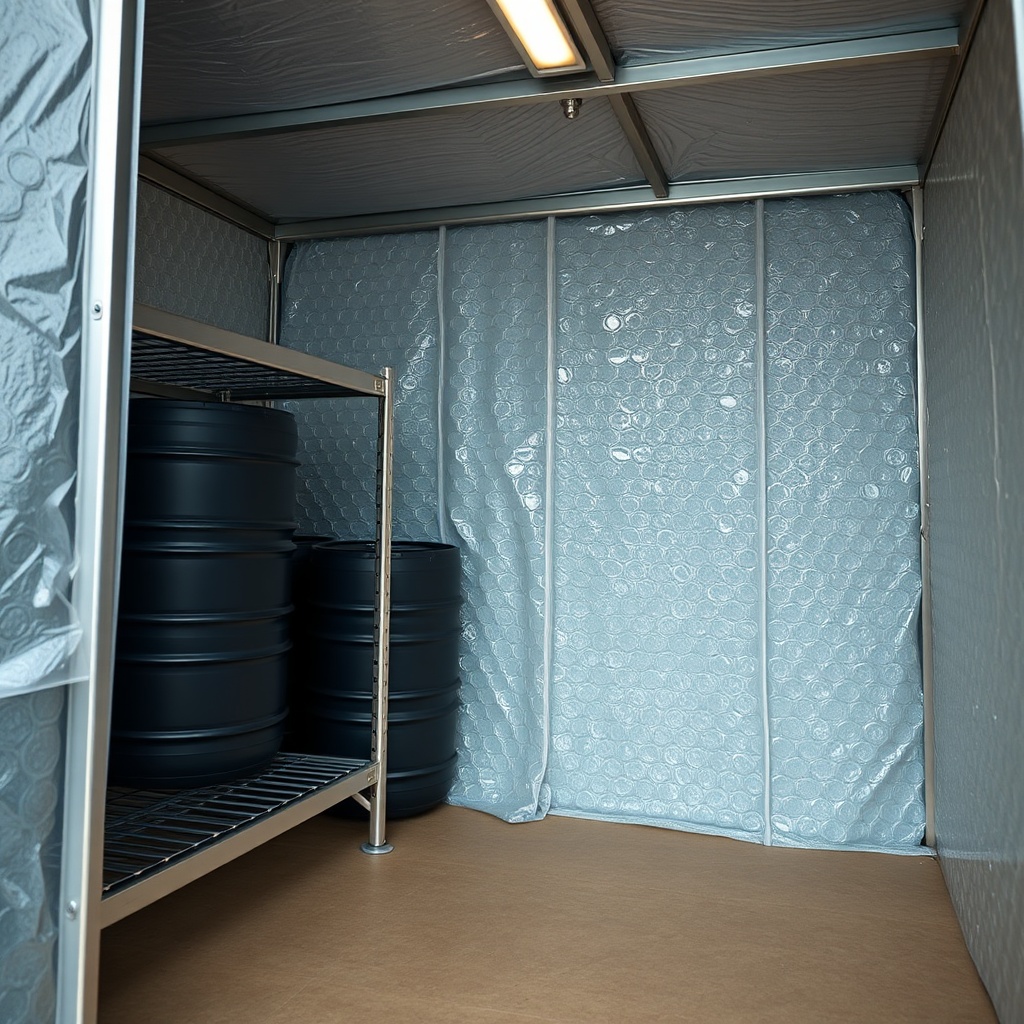
- Water barrels: Place two or three 55-gallon (208-litre) black or dark-coloured plastic drums along the north wall. Each drum holds about 450 pounds (204 kg) of water. In a 6×8 space, three drums provide roughly 1,350 lb (612 kg) of thermal mass. This can raise overnight minimum temperatures by 3–5 °F (1.5–2.5 °C).
- Stone or tile floor: If you install a brick or concrete paver floor, it acts as low-profile thermal mass. A 2-inch (5 cm) thick paver base covering the 48 sq ft (4.5 m²) floor adds about 600 lb (272 kg) of mass.
- Phase-change materials (PCMs): Paraffin-based panels or containers can store up to five times more heat per pound than water. A single 2×4 ft PCM panel mounted on the north wall can absorb heat at 70 °F (21 °C) and release it at night, keeping temperatures above 45 °F (7 °C) on all but the coldest nights.
Avoid clear glass or metal containers—dark surfaces absorb up to 80% more solar radiation. For proper floor support, see Palram Canopia Harmony 6×8: Ground Preparation Tips for a Stable Foundation to ensure your thermal mass sits on a level base.
| Material | Heat Capacity (Btu/lb·°F) | Cost per Unit | Space Required | Temp. Boost at Night |
|---|---|---|---|---|
| Water in black drums | 1.0 | $15–$25 per 55-gal drum | 2.5 ft² each (north wall) | +3–5 °F (1.5–2.5 °C) |
| Concrete pavers (2-in thick) | 0.2 | $150–$250 for 48 ft² | Entire floor area | +2–4 °F (1–2 °C) |
| Phase-change material (PCM) panel | ~5 (latent heat) | $80–$120 per 2×4 ft panel | 8 ft² wall space | +5–8 °F (2.5–4.5 °C) |
Can You Use Rock Beds or Underground Pipes for Heat Storage?
Yes, a buried rock bed system can store daytime heat for overnight release, but it requires more labour. For the Harmony 6×8, a simple sub-grade system works well. Dig a trench 2 feet (0.6 m) deep and 1 foot (0.3 m) wide along the north wall, fill it with 1-inch (2.5 cm) stones, and cover with soil. Warm air from the greenhouse is circulated through perforated PVC pipes embedded in the rock bed using a small solar-powered fan. The rock absorbs heat during the day and releases it at night.
This system can add 4–6 °F (2–3 °C) to overnight lows. Key points:
- Use 4-inch (10 cm) diameter perforated pipes for airflow.
- Cover the rock bed with a vapour barrier to prevent moisture loss.
- Install a vent near the ridge to draw hot air into the pipes.
For airflow management, see Palram Canopia Harmony 6×8: Optimizing Air Circulation with Fans to integrate a fan system without sacrificing passive solar gains.
How Do Insulated Curtains or Bubble Wrap Reduce Heat Loss?
At night, twin-wall polycarbonate loses heat through convection and radiation. Adding a second layer of insulation can cut heat loss by 25–30%. The simplest solution is horticultural bubble wrap (bubble size 1 inch / 2.5 cm) attached to the frame with clips or magnetic strips. For the Harmony 6×8, you’ll need about 100 ft² (9.3 m²) of bubble wrap—cost around $30–$50.
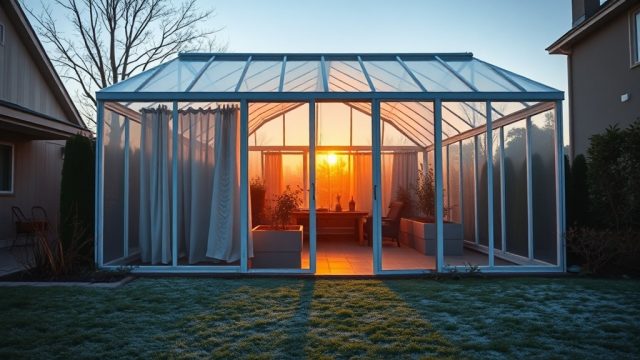
More refined options include thermal curtains made from aluminised polyester (like emergency blankets). Hang them on a curtain wire along the ridge, dropping down the sides. These reflect radiant heat back to the plants. In practice, bubble wrap alone can keep interior temperatures 3–5 °F (1.5–2.5 °C) warmer on a 20 °F (-7 °C) night. Always remove bubble wrap during sunny days to allow passive solar gain.
For mounting ideas on shelving for heat reflectors, read Palram Canopia Harmony 6×8: DIY Custom Shelving Plans for Small Greenhouses.
What Role Does Greenhouse Orientation Play in Passive Heating?
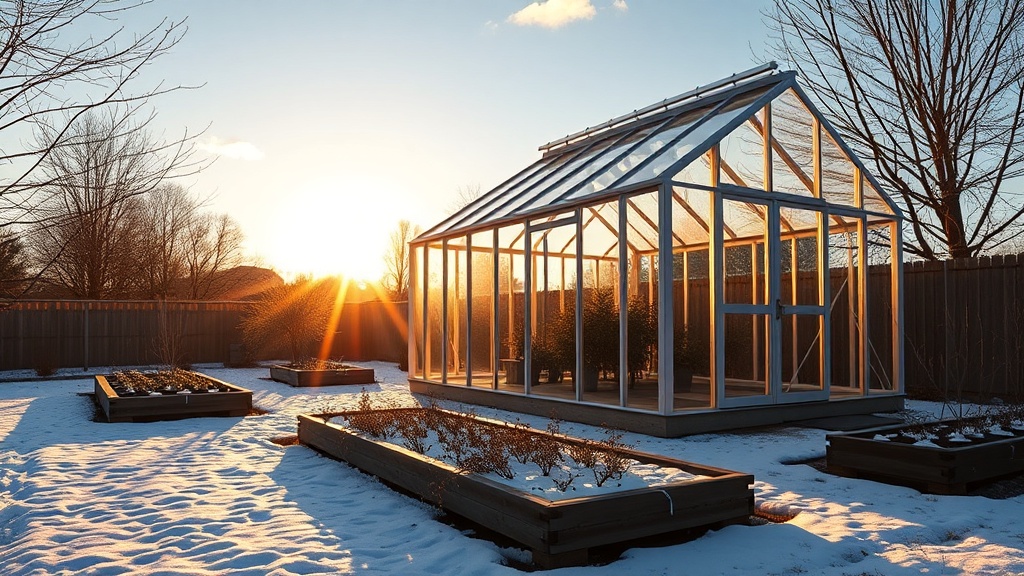
Orientation determines how much solar energy enters the structure. For the Palram Canopia Harmony 6×8, the optimal orientation is with the 8-foot (2.4 m) long side facing true south (in the Northern Hemisphere). This maximises winter sun exposure when the sun is low. A south-facing long wall captures 30–40% more light than an east-west orientation.
Key tips:
- Use a compass to find true south (not magnetic south, which can vary by 5–10 degrees).
- Place thermal mass directly in the sun path (south and west sides).
- Keep roof ridge clear of shadows from trees or buildings.
A south-facing Harmony 6×8 can see interior temperatures 10–12 °F (5.5–6.5 °C) warmer on a sunny winter day than if it were shaded from the south. For first-time builders, Palram Canopia Harmony 6×8: DIY Assembly Tips for First-Time Builders includes rotation orientation recommendations during assembly.
What Owners Say About Their Palram Canopia Harmony 6×8 Heating Experience
Owners of the Harmony 6×8 often highlight the passive solar potential. Mark from Vermont wrote: “I added two black 55-gallon drums inside along the north wall. On a 15 °F night, the greenhouse stayed at 38 °F—enough to keep my cold-hardy greens alive. Without them, it dropped to 25 °F.” Another owner, Sarah in Oregon, uses bubble wrap on the panels from November to March: “It costs about $40 a season, and I can start tomatoes by mid-April instead of June.”
Some note that the aluminium frame is less thermally efficient than wood, but it’s maintenance-free. A common tip is to use a reflective white tarp over the thermal mass at night to prevent heat from escaping upward. After three winters, most report the structure holds up well, with panels staying clear.
Frequently Asked Questions
1. Can the Palram Canopia Harmony 6×8 maintain above-freezing temperatures without electricity?
Yes, with adequate thermal mass and insulation. On sunny winter days, temperatures can reach 70–80 °F (21–27 °C) inside. With water drums and bubble wrap, overnight lows can stay above 32 °F (0 °C) if outdoor temperatures are above 20 °F (-7 °C).
2. How much thermal mass do I need for a 6×8 greenhouse?
A good rule is 4–5 gallons (15–19 litres) per square foot of floor area. For the 48 sq ft floor, that means 192–240 gallons (727–908 litres)—equivalent to three to four 55-gallon drums. Place them along the north wall for maximum exposure.
3. Will bubble wrap damage polycarbonate panels?
No, if applied carefully. Use suction cups or clips designed for greenhouses. Avoid adhesive tape, which can leave residue. Remove bubble wrap in spring to prevent overheating.
4. Can I use a compost pile for heat inside the greenhouse?
Yes, but space is limited. A small compost bin (2×2×2 ft) can generate 100–110 °F (38–43 °C) as it decomposes, raising ambient temperature by 2–3 °F (1–1.5 °C). Locate it near the center to allow heat to radiate.
5. How does passive solar heating compare to electric heaters for this greenhouse?
Passive heating is free but less predictable. For example, on overcast days, passive systems provide minimal warmth. Electric heaters (750–1,500 watts) can maintain precise temperatures but cost $0.50–$1.00 per day in electricity. Many owners use passive for base heat and a small heater as backup.
6. Should I paint thermal mass black?
Yes, but only if the surface is not glossy. Flat black paint absorbs 90–95% of solar radiation, while grey or white absorbs only 50–70%. Use non-toxic, exterior-grade paint or a plastic-compatible epoxy to avoid off-gassing in the greenhouse.