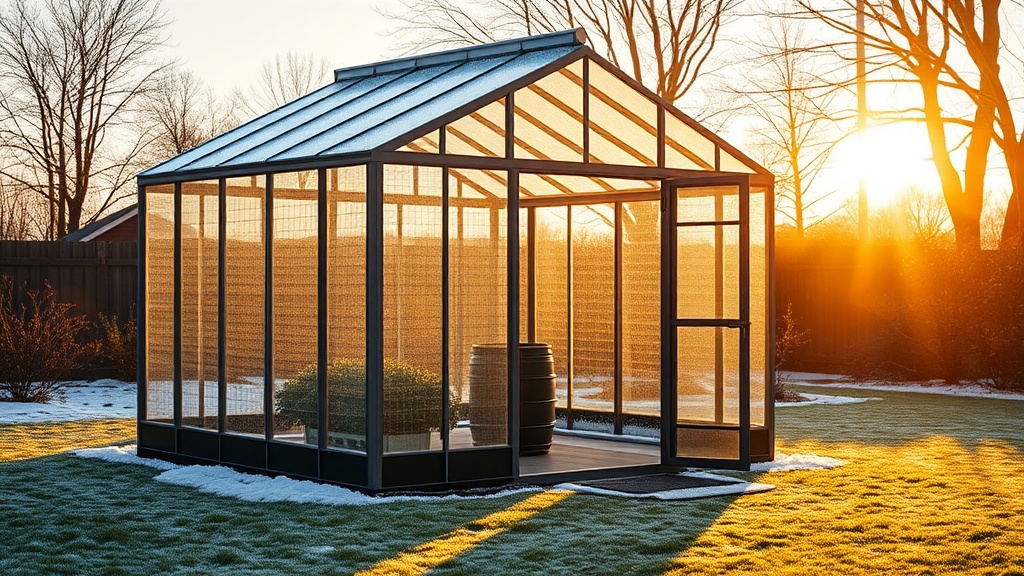
Suncast 8×6 Tremont Heating: Best Ways to Keep It Warm in Winter
Keeping a Suncast 8×6 Tremont greenhouse functional through freezing temperatures requires a careful balance of insulation and supplemental heat. This article breaks down the most effective heating strategies specific to this resin-and-polycarbonate structure, focusing on cost, efficiency, and practicality for the home grower. You’ll learn which methods work, which to avoid, and how to protect your plants without breaking the bank.
How Much Heat Loss Is Normal for the Suncast 8×6 Tremont?
The Suncast 8×6 Tremont uses 6mm twin-wall polycarbonate panels, which naturally offer better insulation than single-pane glass (R-value roughly 1.8–2.0). However, the frame is resin, not metal, which eliminates thermal bridging through the structure itself. Still, the biggest heat loss points are the door seals, the ridge vent, and where the base meets the ground. Expect nighttime temperature inside to be about 5–10°F (3–6°C) warmer than outside without any supplemental heat. In a hard freeze (20°F outside), the interior may hover around 28–30°F—enough to kill tender plants.
What Is the Best Supplemental Heater for the Suncast 8×6 Tremont?
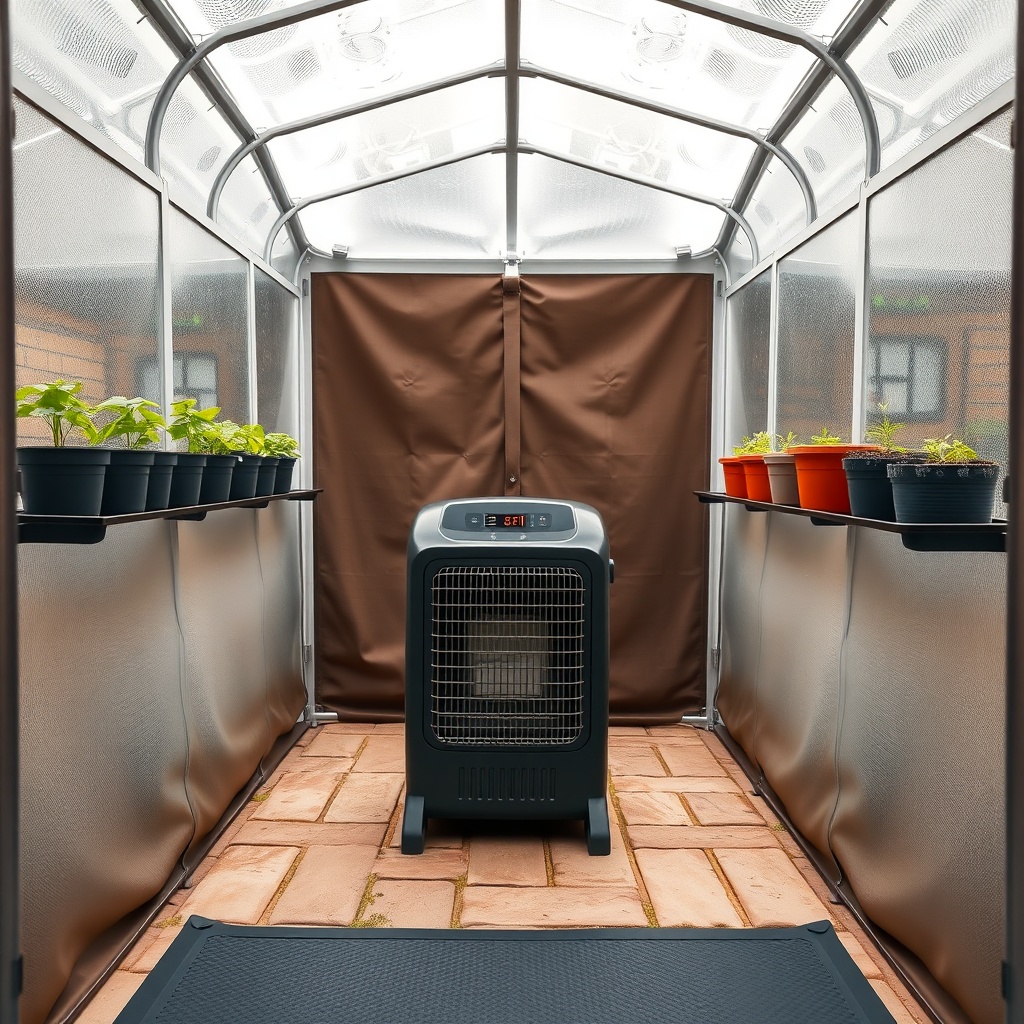
For a greenhouse this size (roughly 48 square feet floor area, about 280–300 cubic feet), a 500–750 watt electric fan heater with a built-in thermostat is the most practical choice. Units like the Honeywell HT-900 or a small garage heater (e.g., 1,500-watt on low setting) work well. Avoid propane or kerosene heaters unless you have excellent ventilation—polycarbonate panels can trap fumes, and ethylene will damage plants. Always place the heater on a non-flammable surface (e.g., a paving stone) and keep it at least 12 inches from polycarbonate panels to prevent warping.
For off-grid scenarios, a 100-watt incandescent bulb per shelf (covered with a small clay pot to diffuse heat) can provide gentle warmth for a small number of seedlings, but won’t prevent freezing in a sustained cold snap. A soil heating cable buried in propagation trays is another low-power option for tender roots.
Should I Insulate the Interior of the Suncast 8×6 Tremont?
Yes, but only certain parts. The twin-wall polycarbonate already provides decent insulation, so adding bubble wrap to the panels cuts light transmission by up to 20% and can cause condensation issues. Instead, focus on the floor and the lower walls. A 2-inch layer of rigid foam board (XPS) under the grow bench or on the floor near the base helps retain ground heat. Use reflective foam panels (like Reflectix) placed between the polycarbonate and the frame at the corners—this reduces drafts without blocking light. Do not cover the ridge vent or door seals permanently; you need some airflow even in winter to prevent humidity buildup and fungal diseases.
How Can I Prevent Ground Freeze in the Suncast 8×6 Tremont?
The base of the Suncast 8×6 Tremont sits on a metal frame that rests on the ground. In cold climates, the ground itself can freeze upward, damaging both the frame and plant roots. The best solution is to lay a 4-mil polyethylene vapor barrier on the floor, then cover it with 2–3 inches of crushed stone or pea gravel. On top of that, place interlocking foam floor tiles (like gym mats) to add R-value. For severe climates (zones 5 and colder), consider a 2-inch extruded polystyrene slab under the entire floor area. This stops heat from being drawn into the frozen ground.
| Issue | Severity Level | Typical Sign |
|---|---|---|
| Door seal gap | Needs attention soon | Visible light or drafts around door edge |
| Polycarbonate panel crack | Needs attention soon | Hairline fracture, usually near screw holes |
| Heater placement too close to wall | Needs attention soon | Warped or discolored polycarbonate near heater |
| Condensation on roof panels | Usually not urgent | Water droplets forming, no leakage yet |
| Frozen base frame bolts | Needs attention soon | Bolts won’t turn, swelling visible |
| Soil surface freezing | Usually not urgent | Surface frost on potting soil in unheated trays |
Can I Use a Thermal Mass (Water Barrels) to Heat the Tremont?
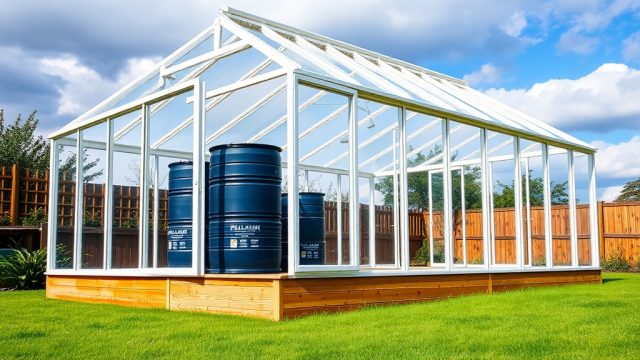
Thermal mass works best in greenhouses with high solar gain—like glass or polycarbonate structures in full sun. The Suncast 8×6 Tremont’s polycarbonate panels diffuse light slightly, so solar gain is moderate. A 55-gallon water barrel painted matte black placed in direct sun can absorb 5,000–6,000 BTUs during a sunny winter day, releasing it slowly overnight. That’s enough to raise the inside temperature 3–5°F. For the Tremont’s floor area, two barrels are the practical maximum without wasting too much space. Place them on a reinforced spot—the resin floor can’t support 450+ pounds without a load-distributing board underneath. This method won’t prevent a hard freeze alone, but it reduces the work your heater has to do.
What About Automatic Vent and Thermostat Settings?
Even in winter, a sunny day can push a Tremont over 85°F—which can shock cold-hardy plants. Install a solar-powered automatic vent opener (like the Autovent MK7) on the ridge vent. Set it to open at 70°F and close at 55°F. Pair this with a thermostat for the heater set to 40°F (minimum survival temperature for most crops). This creates a passive temperature band: 40°F at night, 55–70°F on sunny days. For precise control, use a plug-in digital thermostat (Inkbird or similar) that cycles the heater based on actual interior temperature, not the ambient air. Mount the sensor near plant canopy level, not near the heater, to avoid false readings.
What Owners Say
Owners of the Suncast 8×6 Tremont frequently mention that the factory door seal is the weakest link—many replace it with adhesive weatherstripping by the second winter. Another common observation: the polycarbonate panels hold up well, but the plastic glazing clips can become brittle in cold temperatures, so avoid overtightening when doing maintenance. Several growers report success with a single 750-watt heater placed on a timer running only during the coldest 4–6 hours before dawn, keeping interior temperatures above 35°F even when outside hits 15°F. Many also note that the resin frame does not corrode like metal, which is a big plus for long-term use in damp winter conditions.
For more on panel durability, see Suncast 8×6 Tremont Glazing: How Durable Are the Polycarbonate Panels?. On frame longevity, read Suncast 8×6 Tremont Frame: Resin vs Metal – Which Offers Better Longevity?. For cleaning advice, check Suncast 8×6 Tremont Maintenance: Cleaning and Care for Resin Panels.
Frequently Asked Questions
Can I safely use a portable propane heater in my Suncast 8×6 Tremont?
Not recommended inside the greenhouse. Propane heaters produce carbon dioxide and water vapor, which raise humidity and can lead to plant damage or mold. If you must use one, place it outside and blow warm air in via a duct, but this is inefficient for the small Tremont size.
What temperature should I keep my Tremont at night in winter?
For most cold-hardy crops like kale, lettuce, or spinach, 35–40°F is sufficient to prevent freezing damage. For tender plants (tomatoes, peppers in early spring), aim for 50°F. A thermostat set to 40°F is a good compromise for mixed planting.
Do the polycarbonate panels crack in extreme cold?
The 6mm twin-wall panels have a working temperature range of -40°F to 220°F. They won’t crack from cold alone, but they can become brittle. Avoid hitting them with tools or heavy snow loads. The panels themselves are fine; the clips that hold them are the weak point in extreme cold.
How much does it cost to run a 750-watt heater in the Tremont per month?
At $0.12 per kWh (US average), running a 750-watt heater continuously for 24 hours costs $2.16/day or about $65/month. In practice, you’ll run it 6–8 hours nightly, so about $16–22/month in typical winter months. Adjust based on your local electricity rates.
Should I leave the ridge vent open or closed in winter?
Closed at night to retain heat, but open it slightly during sunny daytime hours to release excess humidity and hot air. Automatic vent openers are ideal because they react to temperature changes without manual intervention.
Can I use a space heater designed for bathrooms in the Tremont?
Yes, as long as it’s a fan-forced heater with a thermostat and has an IPX4 splash-proof rating. Bathroom heaters are designed for damp spaces, so they’re a safer choice than standard household space heaters. Avoid oil-filled radiators—they take too long to warm the small Tremont space.