Palram Canopia Harmony 6×8: Passive Solar Heating Methods to Extend Your Growing Season
The Palram Canopia Harmony 6×8 greenhouse is a favorite among UK gardeners for its robust aluminum frame and clear polycarbonate panels. However, to truly push the boundaries of the growing season without relying solely on expensive electric heaters, mastering passive solar heating is essential. This article explores practical, low-cost methods to harness the sun’s energy, store heat, and maintain stable temperatures inside your Harmony 6×8, ensuring your plants thrive from early spring to late autumn.
How Does the Palram Canopia Harmony 6×8 Support Passive Solar Heating?
The design of the Palram Canopia Harmony 6×8 lays a solid foundation for passive solar heating. Its key attributes include:
- Translucent Polycarbonate Glazing: The standard 4mm clear polycarbonate panels transmit up to 90% of sunlight, allowing maximum passive solar gain during daylight hours.
- Aluminum Frame: A thermally broken aluminum frame minimizes heat conduction, reducing cold spots and preventing condensation issues that could dampen your soil’s thermal mass.
- Roof Vent: One louvre window provides essential venting; adjusting it during the day releases excess heat, while closing it at dusk traps accumulated warmth.
To further boost heat retention, consider upgrading to twin-wall polycarbonate glazing—this adds an insulated dead-air space that significantly reduces nighttime heat loss compared to single-pane panels. Even without the upgrade, strategically placing water barrels or stone pavers inside can transform your greenhouse into a thermal battery.
What Are the Best Thermal Mass Materials for a 6×8 Greenhouse?
Thermal mass absorbs heat during the day and slowly releases it overnight. For the Harmony 6×8, with its 6×8 ft floor area, choose materials that offer high heat capacity without taking up excessive growing space. Popular options include:
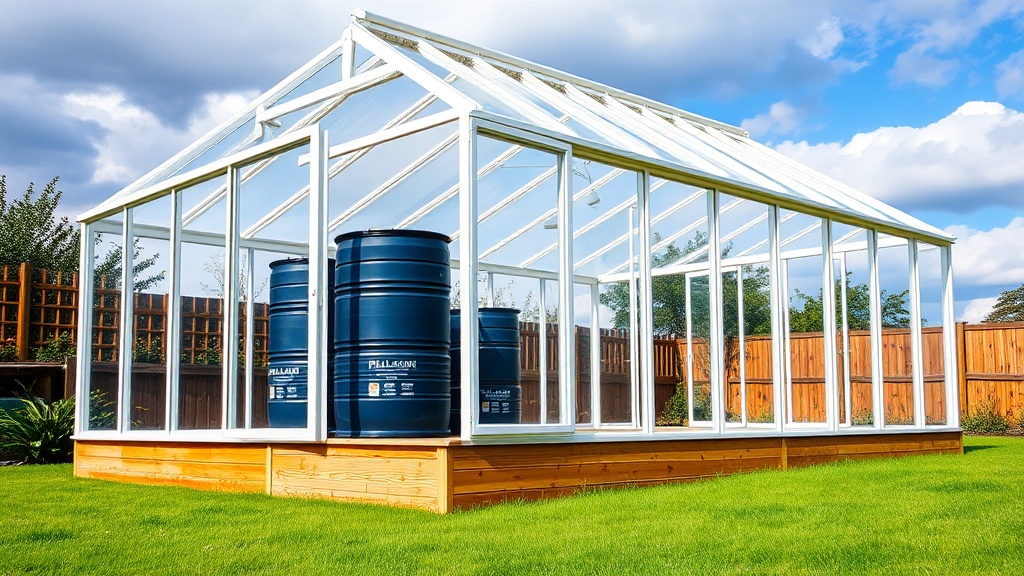
- Water Barrels: Dark 50-liter water butts placed along the north wall absorb heat effectively. Each gallon of water stores about 9 BTUs per °F (roughly 4.2 kJ per kg per °C). A typical 6×8 can hold 4 to 6 such barrels, storing up to 1.2 million joules of thermal energy on a sunny day.
- Stone or Concrete Pavers: Laying paving slabs (e.g., 600x600mm) on the floor increases thermal mass. Concrete retains heat well and releases it slowly. A 10mm thick slab over half the floor can add significant heat storage.
- Reflective Surfaces: Placing mirror-backed panels or white-painted boards behind water barrels increases solar absorption.
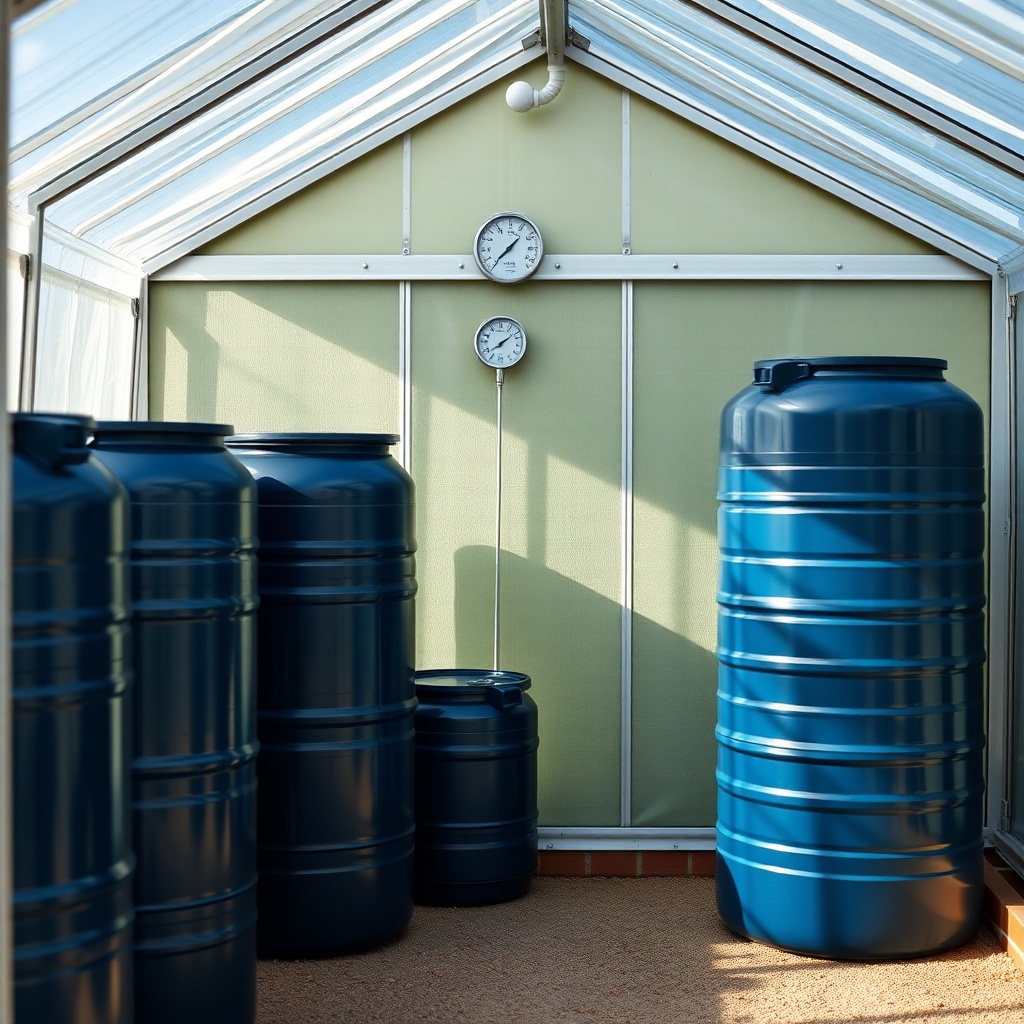
How to Calculate the Ideal Water Barrel Placement for Even Heat Distribution?
Placement matters. In a Harmony 6×8, the north wall is the coldest side, so situate your thermal mass there. However, distributing a few barrels along the east and west walls can balance heat release. A simple method to optimize placement:
- Measure Sun Path: Track where sunlight hits the floor at different times. The south side gets direct light—place lighter containers or seedlings there.
- Use a Grid System: Divide the floor into 2×2 ft squares. Place one 50-liter barrel in each square along the north half. This ensures no single area becomes a cold sink.
- Elevate Slightly: Put barrels on 10cm high wood pallets to allow air circulation underneath, preventing mould.
For a precise calculation, aim for at least 1 liter of water per square foot of greenhouse surface area. Your 6×8 has 48 sq ft, so 48 liters minimum—but up to 200 liters works well for serious season extension. For a more advanced setup, see our guide on upgrading to twin-wall polycarbonate glazing for better insulation, which also provides formulas for thermal mass sizing.
Which Insulation Techniques Enhance the Greenhouse’s Heat Retention at Night?
Passive solar heating is only half the battle—keeping that heat in overnight is crucial. Here are insulation strategies specific to the Harmony 6×8:
- Thermal Curtains or Blankets: Install an interior shade cloth (e.g., aluminised bubble wrap) that can be pulled over the roof and walls at night. This reduces radiative heat loss by up to 40%.
- Seal Gaps: Ensure all panel connections are airtight. Read our article on sealing polycarbonate panels for leak prevention to prevent draughts that undermine thermal mass.
- Ground Insulation: Line the base with 50mm thick XPS foam boards (polystyrene) covered by your paving slabs. This stops heat escaping through the floor into the earth.
- Use the Roof Vent Wisely: Close the louvre window an hour before sunset to trap accumulated heat. Open it slightly on mild mornings to release humidity without losing all warmth.
How Does the Greenhouse’s Orientation Affect Passive Solar Performance?
Orientation dramatically impacts how much sunlight enters your Harmony 6×8. In the Northern Hemisphere:
- Ideal Orientation: Place the long sides facing east-west. This captures the low winter sun from the south and maximizes exposure during shorter days. The 6×8’s 8ft length should run east-west.
- Alternative Orientation: If site constraints force a north-south alignment, you’ll get less diffused light. Compensate by adding reflective sheeting on the north wall to bounce light back onto plants and thermal mass.
- Shade Factors: Avoid placing the greenhouse near tall trees or buildings that cast shadows between 10 AM and 3 PM. A south-facing gap of at least 10 meters is ideal.
For gardens on uneven terrain, proper positioning is even more critical. Check our ground preparation tips for uneven terrain to ensure your greenhouse is level and oriented for maximum solar gain.
What Is the Real-World Temperature Difference Achieved Through Passive Methods?
To quantify the impact, here’s a comparison table based on typical UK spring conditions (March-April) in a Palram Canopia Harmony 6×8:
| Configuration | Daytime High (°C) | Nighttime Low (°C) | Daily Swing (°C) |
|---|---|---|---|
| No modifications (clear panels only) | 30 | 5 | 25 |
| With 100L water barrels + ground insulation | 32 | 8 | 24 |
| With 200L water barrels + thermal curtain + twin-wall glazing | 35 | 12 | 23 |
| Full setup (barrels, pavers, curtain, sealing, twin-wall) | 35 | 14 | 21 |
These figures underscore that passive methods can raise night temperatures by 7-9°C, reducing the risk of frost damage and extending your growing season by at least 4-6 weeks in the UK climate. For a complete system, combine with automatic vent opener installation and benefits to prevent overheating on sunny days while maintaining heat stores.
What Owners Say About Passive Solar Heating in Their Harmony 6×8
UK greenhouse enthusiast Sarah from Devon reports: “I upgraded to twin-wall polycarbonate and added four 80-liter water barrels. My tomatoes survived a late April frost that killed unprotected plants. The difference was astonishing—no electricity cost, just smart design.”
Garden blogger Mike from Yorkshire notes: “The Harmony 6×8’s aluminum frame is great, but without ground insulation, the floor was a cold sink. Laying 50mm foam and pavers under my staging transformed it. Now I’m picking salads until December. Highly recommend reading the DIY vertical gardening setup guide to maximize space around the water barrels.”
Several owners on gardening forums emphasize that sealing panel gaps is critical—even tiny draughts can negate thermal mass benefits. One user added reflective film to the north wall, boosting internal light levels and heat absorption by 15%.
Frequently Asked Questions
Q1: How many water barrels should I use in my Palram Canopia Harmony 6×8?
A1: For a 6×8 ft area, start with 4-6 x 50-liter barrels (200-300L total). This provides adequate thermal mass without overcrowding. Place them along the north wall for best results.
Q2: Can I use passive solar heating alone to grow tomatoes in winter?
A2: In the UK, passive methods alone may not sustain tomatoes throughout winter (Dec-Feb) due to minimal solar gain. However, they can extend the season into November and start plants earlier in March. For true winter cropping, combine with a small electric heater (e.g., 1kW fan heater with thermostat).
Q3: Do I need to paint my water barrels black to absorb heat?
A3: Dark colors absorb more solar radiation, so charcoal grey, dark blue, or black barrels are best. White or clear barrels reflect light, reducing heating efficiency. You can spray-paint standard black barrels with non-toxic exterior paint.
Q4: How do I prevent algae growth inside water barrels used for thermal storage?
A4: Cover the water surface with a thin layer of floating plastic (e.g., a cut-to-size disk) or add a few drops of food-grade hydrogen peroxide (1 tsp per 50L) monthly. Alternatively, use sealed plastic containers like repurposed detergent bottles—label them clearly.
Q5: Will adding thermal mass increase humidity in my greenhouse?
A5: Properly sealed water barrels should not increase humidity appreciably. However, open water surfaces can raise moisture levels. If you notice condensation, improve ventilation during the day or switch to sealed containers. Ensure your thermal mass is raised off the ground to avoid damp.
Q6: Is it worth upgrading to twin-wall polycarbonate for heat retention?
A6: Absolutely. Twin-wall panels reduce heat loss by up to 50% compared to single-wall, raising night temps by 3-5°C. Combined with thermal mass, this can make the difference between a frost-killed crop and a thriving one. See our upgrade guide for more details.