Why Does the Suncast 8×6 Tremont Need Dedicated Heating Solutions for Early Spring?
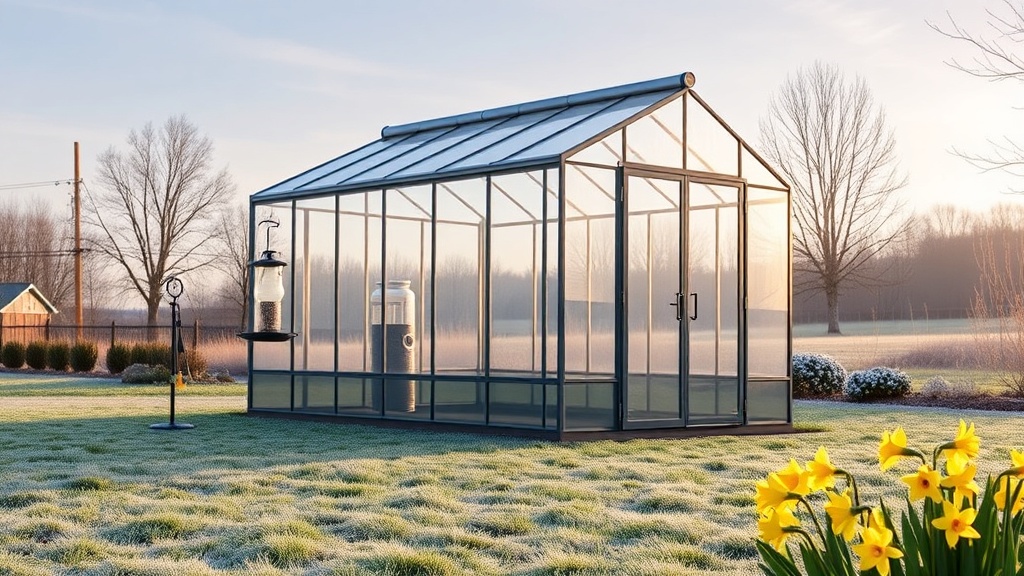
The Suncast 8×6 Tremont greenhouse offers a compact, efficient footprint for dedicated growers, but its standard glazing and ventilation leave it vulnerable to late frosts and early-season temperature swings. Without supplemental heating, internal temperatures can drop below freezing during March nights, stalling germination and damaging tender seedlings. This article explores heating and insulation strategies to transform your Tremont into a productive early-spring powerhouse, covering everything from passive thermal mass to active electrical heaters.
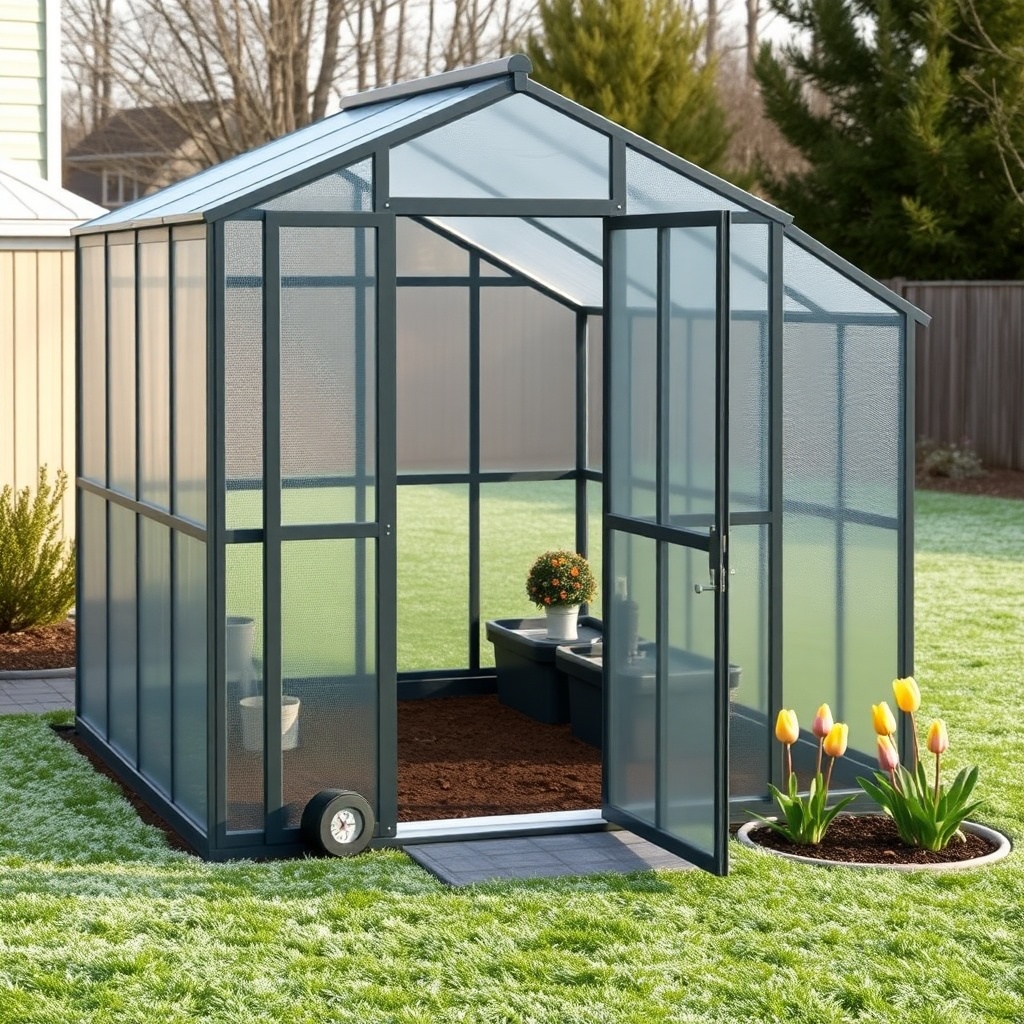
Understanding the greenhouse’s baseline thermal performance is the first step. The stock model features 3mm polycarbonate panels with an R-value around 1.0, offering minimal resistance to heat loss. For early-spring planting, you’ll need to raise that effective insulation value significantly while adding a reliable heat source. Let’s examine the most practical approaches for the 8×6 (8 ft by 6 ft) structure.
What Is the Most Cost-Effective Heating Method for the Suncast 8×6 Tremont?
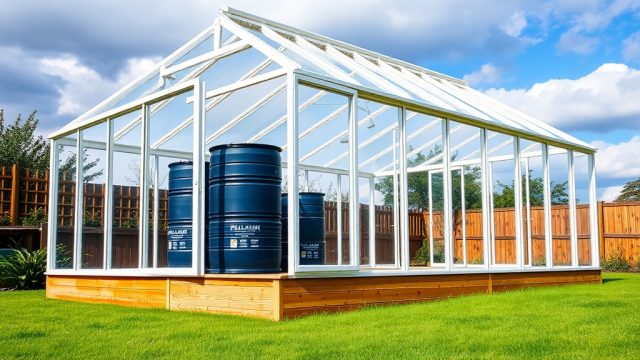
For growers on a budget, the most cost-effective heating solution combines passive solar gain with thermal mass. The Suncast 8×6 Tremont’s south-facing panels can absorb significant sunlight during the day, but without a way to store that heat, it escapes rapidly after sunset. Adding water barrels or dense masonry inside the greenhouse acts as a thermal battery, releasing stored heat slowly overnight.
A single 55-gallon water drum painted black absorbs roughly 4,500 BTU per day in full sun, raising nighttime temperatures by 3°C to 5°C in a well-sealed Tremont. Place two such drums along the north wall near the apex of the roof for optimal heat distribution. For a more permanent solution, consider upgrading to twin-wall polycarbonate glazing, which can double the insulation value to R-2.0 or higher. This upgrade reduces the heating load by approximately 40% compared to the stock panels.
When passive methods aren’t enough, small fan-forced electric heaters (1,000–1,500 watts) with built-in thermostats are the most reliable active option. Expect to run such a heater for 8–10 hours per night during early spring, costing roughly £1.20 to £1.80 per night at U.K. electricity rates (around £0.34/kWh). A dedicated outdoor extension cord (14-gauge minimum) and a residual-current device are essential for safety.
How Can You Seal Leaks and Drafts in the Suncast 8×6 Tremont to Maximise Heat Retention?
Even the best heater cannot compensate for poor sealing. The Tremont’s multi-panel assembly, roof ridge, and door gaps are common leak points that allow warm air to escape and cold drafts to enter. A simple smoke pencil test on a windy day reveals exactly where infiltration occurs. Focus on these three areas:
- Panel channels: The aluminium extrusions that hold polycarbonate panels can develop gaps over time. Apply a food-grade silicone sealant along the inside of each channel, pressing firmly into corners.
- Ridge joint: Where the roof panels meet at the peak, use closed-cell foam tape (1/4 inch by 1/2 inch) to create a compression seal. Replace annually before planting season.
- Door perimeter: Install heavy-duty weatherstripping on the door frame and a sweep at the bottom. Magnetic strips similar to refrigerator seals can provide an airtight closure for the sliding door.
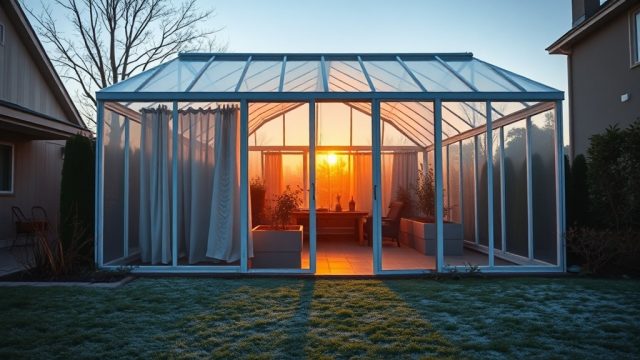
After sealing, verify effectiveness by placing a candle near suspected leaks on a breezy day—if the flame flickers, reapply sealant. This step alone can boost interior temperature by 2°C to 3°C overnight without any additional energy input. For more permanent improvements, consider pairing seals with heat retention curtains, which add a second thermal barrier during cold nights.
What Is the Ideal Temperature Strategy for Early Spring Crops in the Suncast 8×6 Tremont?
Different crops require different minimum temperatures, and a single setpoint heater may waste energy. The Suncast 8×6 Tremont offers enough interior space to create microclimate zones using movable shelving or row covers. A programmable thermostat with multiple zones is ideal, but for most early-spring planting, a single sensor at plant height (30–45 cm above floor) suffices.
| Crop Type | Minimum Night Temp (°C) | Optimal Day Temp (°C) | Heating Hours Needed (Est.) |
|---|---|---|---|
| Cold-tolerant greens (kale, spinach) | 2 | 10–15 | 4–6 hours |
| Brassicas (cabbage, broccoli) | 5 | 12–18 | 6–8 hours |
| Warm-season seedlings (tomato, pepper) | 10 | 18–24 | 10–12 hours |
| Herbs (basil, cilantro) | 7 | 15–20 | 8–10 hours |
For early-spring planting (March to April), target a night-time low of 5°C for general seed germination. Use a seedling heat mat placed under trays for warm-season crops—this concentrates heat where it’s needed without warming the entire structure. A 20-watt heat mat covering 0.5 m² costs only £0.07 per day to run, making it extremely efficient compared to a 1,500-watt space heater.
Remember that the Suncast 8×6 Tremont’s height (approx. 2.1 m at the peak) allows for vertical stratification. Warmer air rises, so place heat-loving plants on elevated benches (60–90 cm height) and cold-tolerant crops directly on the ground floor. This natural layering reduces heating demand by up to 15%.
What Passive Insulation Upgrades Make the Biggest Difference for the Suncast 8×6 Tremont?
Beyond active heating, passive insulation upgrades can dramatically improve the Tremont’s thermal envelope without recurring costs. The most impactful modifications focus on glazing, floor, and night-time coverage.
- Twin-wall polycarbonate replacement: As mentioned, swapping the stock 3mm single-wall panels for 6mm twin-wall polycarbonate panels reduces heat loss by roughly 50%. This upgrade is especially effective because it adds an insulating air gap (R-2.5) and blocks more infrared radiation. The polycarbonate vs. glass comparison shows that polycarbonate wins on insulation, impact resistance, and cost for this size.
- Floor insulation: Uninsulated concrete or gravel floors conduct cold upward into the greenhouse. Laying 50mm extruded polystyrene (XPS) foam boards under a 50mm screed or capped with plywood can raise floor surface temperature by 3°C. For the 8×6 footprint, this costs roughly £200–£300 in materials and labour.
- Night-time blankets: Even with heat retention curtains, deploying bubble wrap or horticultural fleece over crops on the coldest nights adds a cheap, temporary insulation layer. Secure with clothespins to bench frames.
One frequently overlooked upgrade is sealing the base perimeter against ground-level drafts. The Tremont’s base sits on a frame, and gaps between the frame and the ground can admit cold air. Run a bead of black silicone caulk along the interior base joint, or install a sturdy base option that includes a thermal break. A frost cloth draped over the base at night further reduces heat loss by up to 2°C.
How Do You Automate Heating Control for the Suncast 8×6 Tremont Without Overcomplicating It?
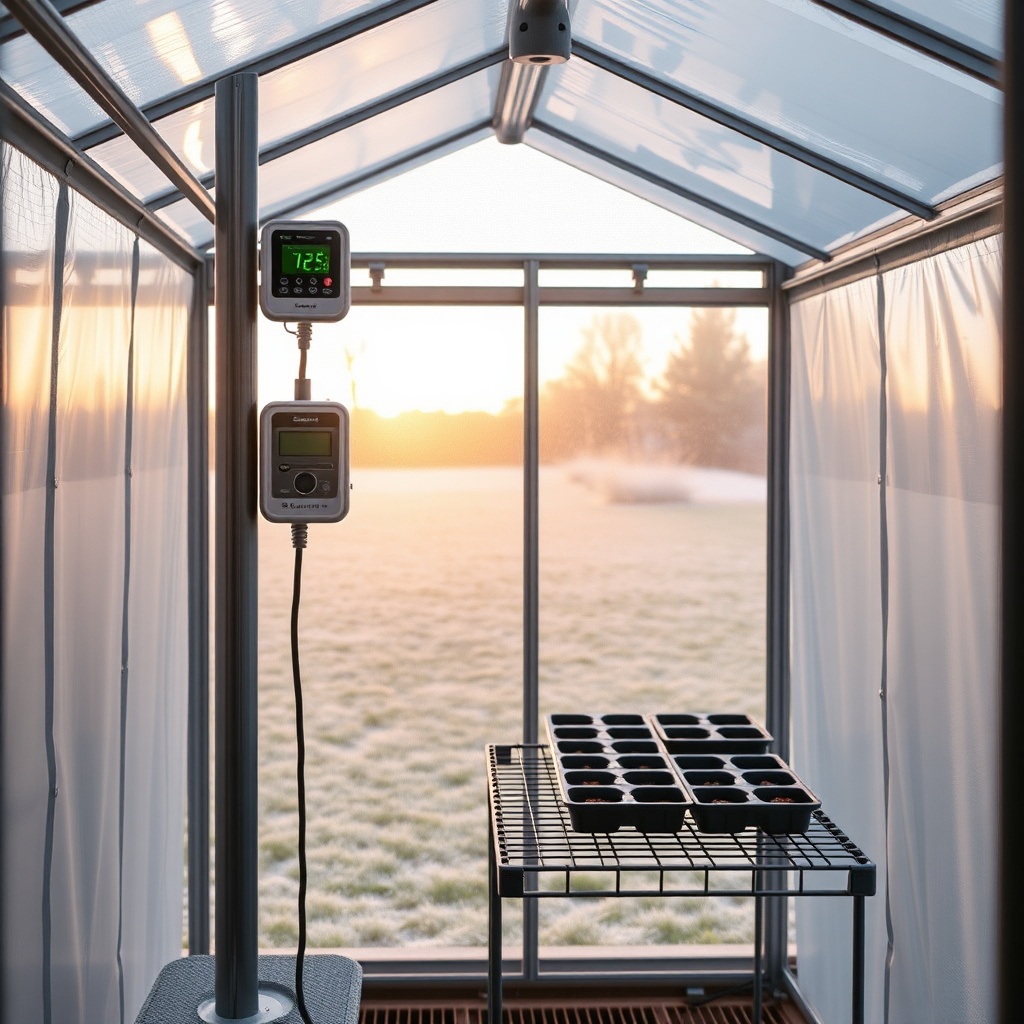
Manually checking and adjusting heaters each morning and evening is tedious and unreliable, especially during early spring when temperature swings are unpredictable. Automation simplifies temperature management and prevents energy waste. The most straightforward setup uses a plug-in thermostat paired with a smart plug and a soil moisture sensor for integrated control.
A digital thermostat (e.g., Inkbird or similar, costing £25–£40) with a remote sensor placed at plant height can switch a 1,500W electric heater on/off based on a 1°C hysteresis. Connect the thermostat to a smart plug (compatible with Alexa or Google Home) so you can override settings remotely if the forecast suddenly changes. To refine control, add a timer that allows the heater to run only during the coldest hours (midnight to 6 AM). This reduces electricity consumption by 20–30% compared to running it all night.
For more advanced setups, consider integrating an automatic shade system that closes curtains during cold nights and opens them by day to capture solar gain. The shade system installation guide explains how to link the controller to a temperature sensor for fully autonomous operation. This combination can maintain interior temperatures within a 2°C range even when outside temps drop to -5°C, making early-spring planting reliable and repeatable.
What Do Owners Say About Heating the Suncast 8×6 Tremont in Early Spring?
Owner feedback consistently highlights two themes: the Tremont’s compact size makes it responsive to heating, but the stock glazing demands upgrades for consistent early-spring performance. One U.K. gardener from Yorkshire reported that after adding twin-wall polycarbonate panels and a 1,500W convection heater, his greenhouse maintained 8°C inside during a frosty March night when outside temps hit -3°C. He noted that the heater ran for only 6 hours, costing about £1.50.
Another owner in Scotland achieved success with a passive approach: two 200-litre water butts painted matte black, plus heavy bubble wrap insulation on all panels. She reported that her night-time temperature rarely dropped below 6°C, which was sufficient for overwintering lettuce and spring onions. However, she warned that without a base seal, the floor remained icy, and she added 50mm XPS foam beneath a recycled plastic floor mat.
A common complaint involves the aluminium frame acting as a thermal bridge, allowing cold to transfer directly inside. Several owners mitigated this by wrapping the interior aluminium posts with closed-cell foam pipe insulation during winter months. This simple hack, combined with weatherstripping on the door, eliminated drafts and raised temperatures by 1.5°C. One experienced grower from the Midlands emphasised that the Tremont’s small volume (approx. 10 m³) means even modest insulation improvements have outsized effects compared to larger greenhouses.
Finally, many owners recommend starting the heating system two weeks before planting, allowing the greenhouse to gradually warm and stabilise the soil. This prevents moisture condensation on cold surfaces, which can trigger fungal diseases. The consensus: with passive insulation and a modest heater, the Suncast 8×6 Tremont can reliably support early-spring planting from mid-March in most of the U.K., provided the local frost date is after March 20.
Frequently Asked Questions About Heating the Suncast 8×6 Tremont
Q: Can I use a propane heater in the Suncast 8×6 Tremont?
A: Propane heaters produce water vapour and carbon dioxide, which can raise humidity and cause condensation issues in a sealed greenhouse. For the small volume of the Tremont (approx. 10 m³), a 1,000–1,500W electric heater is safer and more precise. If you must use propane, ensure adequate ventilation and use a CO monitor.
Q: How much electricity does a 1,500W heater use over a typical March night?
A: Assuming 8 hours of runtime at full power, the heater consumes 12 kWh. At U.K. electricity rates of roughly £0.34/kWh, that’s about £4.08 per night. Using a thermostat and timer can reduce runtime to 4–6 hours, cutting costs to £2.00–£2.70.
Q: What is the optimal placement for a heater in the Suncast 8×6 Tremont?
A: Place the heater near the north wall or centre of the floor, aiming upward to promote air circulation via natural convection. Avoid placing it directly under shelves or near plastic panels, as concentrated heat can warp the polycarbonate. Keep a 30 cm clearance around the heater at all times.
Q: Is it worth upgrading the glazing to twin-wall polycarbonate for insulation?
A: Yes. Twin-wall polycarbonate panels increase the R-value from about 1.0 to 2.5, reducing heat loss by roughly 60%. The upgrade costs £150–£300 depending on panel thickness (4mm to 8mm), and it pays for itself within two to three early-spring seasons through lower heating bills. See the upgrade guide for installation details.
Q: Can I use soil heating cables instead of air heaters?
A: Soil heating cables are excellent for starting seeds and raising root zone temperatures, but they do not significantly warm the air. For early-spring planting that includes above-ground growth (seedlings, greens), a combination of soil cables and an air heater is ideal. Soil cables alone maintain only 10°C root temperature when air is near freezing.
Q: How do I prevent condensation on the inner panels when using a heater?
A: Condensation occurs when warm, moist air touches cooler surfaces. To reduce it, run a small fan continuously to keep air moving, and consider adding a dehumidifier or opening a passive vent for 10 minutes each morning. Also, seal the base to minimise cold air infiltration that cools the panels.