How Does the Riverstone 6×8 Wooden Greenhouse Handle Ventilation?
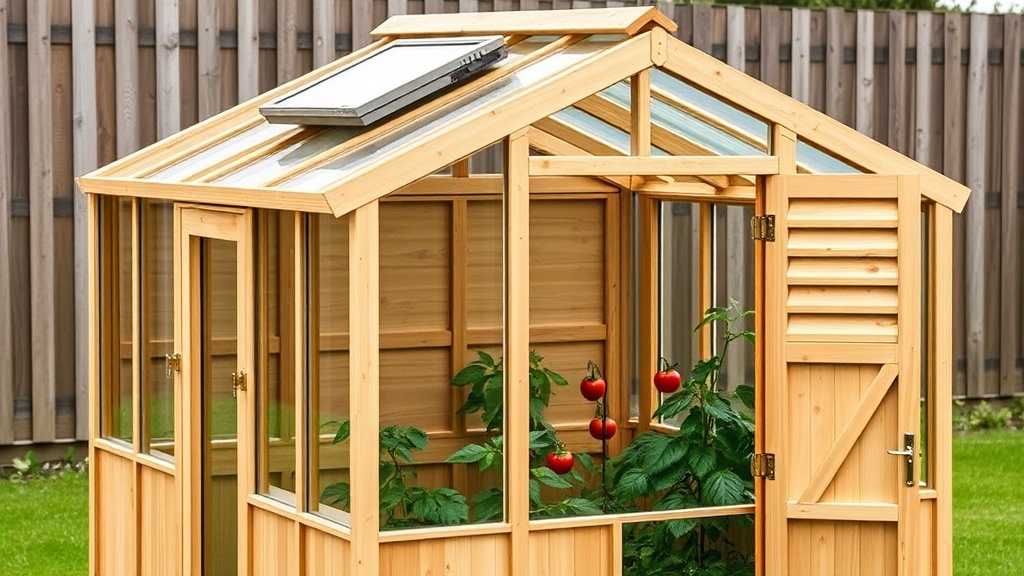
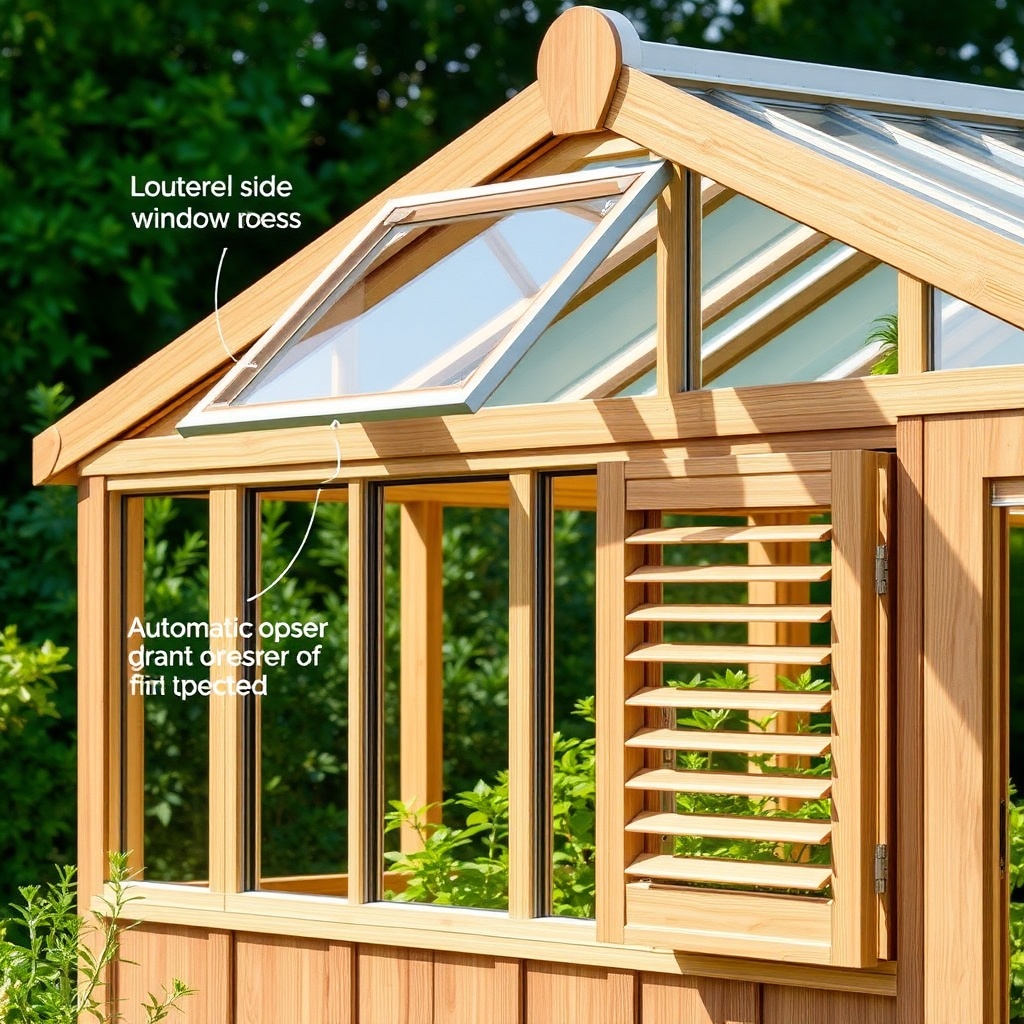
The Riverstone 6×8 Wooden Greenhouse, a compact yet robust structure for UK gardeners, relies on a combination of passive and active ventilation for thermal management. Out of the box, it includes one roof vent and a louvered side window, but many owners find these insufficient during peak summer months. The roof vent uses a manual stay-prop, requiring daily adjustment, which is inconvenient for those with busy schedules or frequent weather shifts.
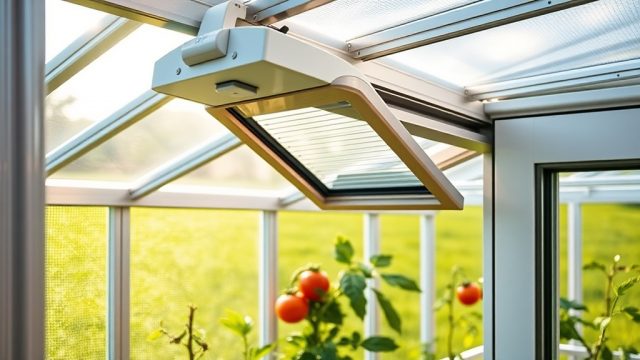
To address these limitations, retrofitting an automatic vent opener is the most common upgrade. The standard 400mm x 600mm roof aperture accepts most UK-market automatic openers, such as the Bayliss Autovent Mk7 or the Vitavia Automatic Roof Vent Opener. These devices use a wax cylinder that expands as internal temperatures rise above 18-22°C, lifting the vent up to 12 inches. This passive system requires no electricity and maintains a steady 5-10°C differential above ambient, critical for preventing heat stress in tomatoes and peppers. A well-adjusted automatic opener reduces peak internal temperatures by up to 8°C compared to a manually propped vent.
What Are the Budget Automatic Ventilation Options for This Greenhouse?
For those unwilling to spend GBP 50-80 on premium openers, several budget-friendly solutions exist. The key is balancing cost with reliability, as cheaper models often use lower-grade wax cylinders that may fail after one season.
| Model | Price (GBP) | Max Lift | Opening Temperature | Build Quality | Warranty |
|---|---|---|---|---|---|
| Bayliss Autovent Mk7 | 55-65 | 12 inches (30 cm) | 22°C ±2°C | Aluminium/metal, robust | 5 years |
| Vitavia Automatic Vent Opener | 45-55 | 10 inches (25 cm) | 20°C ±3°C | Steel, powder-coated | 3 years |
| Gardeners Dream Economy Opener | 25-35 | 8 inches (20 cm) | 23°C ±4°C | Plastic/metal mix, lightweight | 1 year |
| eBay/Amazon No-Name Openers | 15-25 | 6-8 inches (15-20 cm) | Varies widely | All plastic, low durability | None |
As shown, the budget openers from Gardeners Dream or generic Chinese suppliers can work temporarily but often require replacement within a single growing season. A better compromise is the Vitavia model, which offers reasonable performance for 40-50% less than the premium Bayliss. However, for the Riverstone 6×8 Wooden Greenhouse, the Bayliss Autovent Mk7 is widely recommended because its lift capacity matches the heavy wooden roof vent exactly, preventing the vent from sagging or jamming halfway open.
If you want to save further, consider installing two budget openers on opposite sides of the roof vent if you fabricate a longer hinge—though this adds complexity. Most owners find that spending GBP 55-65 once on the Bayliss is cheaper than replacing a GBP 25 opener every year.
Can You Install a Second Vent for Better Cross-Flow?
Yes, adding a second roof vent or an extra side louver significantly improves air exchange in the Riverstone 6×8 Wooden Greenhouse. The standard single roof vent and one louver provide a ventilation area of roughly 0.45m², which is marginal for a 6×8 structure (approx. 4.5m³ internal volume). Horticultural guidelines suggest at least 20% of the floor area should be vent area, translating to about 0.9m²—double the stock configuration.
Installing a second vent involves cutting a matching aperture into the opposite roof slope. Use a jigsaw with a fine-tooth wood blade, seal the cut edges with exterior wood preservative, and mount a standard 400mm x 600mm aluminium vent frame. The cost for materials is roughly GBP 30-40 for the vent kit, plus GBP 10-15 for sealant and fixings. Pair this with a second automatic opener (GBP 25-55) for a fully automated cross-flow system.
For those who prefer not to cut the roof, a louvered side panel on the opposite gable end provides effective cross-draft. Riverstone sells a matching side louver kit (GBP 22-28), which slots into existing framing. Combined with the roof vent, this creates a natural chimney effect, drawing cool air in through the louver and expelling hot air through the roof. For related automation advice, see our guide on automatic roof vent opener installation.
What About Using an Electric Fan as a Backup Cooling Method?
Electric fans are a practical addition, especially during heatwaves when natural ventilation alone cannot keep internal temperatures below 28°C. For the Riverstone 6×8 Wooden Greenhouse, a 12-inch oscillating fan or a small extractor fan mounted in the gable end works well. Solar-powered fans eliminate wiring costs, but their airflow (typically 50-80 CFM) is marginal for this 4.5m³ volume. A mains-powered 12-inch fan (around GBP 30-50) moves 200-300 CFM, dropping temperatures by 3-5°C in still air.
Installation involves mounting the fan near the ridge on a gable end, blowing outward to exhaust hot air. Fit a thermostat controller (GBP 15-25) to automate operation at 25°C. Ensure the fan is weatherproof-rated (IP44 or higher). The downside is increased electrical consumption—roughly 0.08 kWh per hour of operation, costing around GBP 0.12 per 8-hour day at UK rates. This is acceptable for occasional heatwaves, but for daily use, passive automatic vents remain cheaper and more reliable.
For those who want a fully integrated system, consider combining a gable fan with an automatic roof vent. The fan draws air in from vents on the opposite side, creating positive pressure. This pairs well with automatic drip irrigation setups to keep plants hydrated during hot spells.
What Do Owners Say About the Stock Ventilation System?
Feedback from UK owners of the Riverstone 6×8 Wooden Greenhouse reveals a consistent pattern: the structure itself is well-received for its sturdy timber and good glazing, but the ventilation is frequently described as “adequate at best.” On gardening forums and retailer reviews like those on eBay or Just Greenhouse, owners report that during June-August, internal temperatures can soar to 35-40°C even with both vents open manually.
Many recommend installing the automatic opener immediately during assembly to avoid constant monitoring. One owner on a gardening forum stated: “The standard manual vent is fine for spring and autumn, but in July you’ll be running out every two hours to prop it open. Adding an Autovent fixed that entirely.” Another noted that the louvered side window is small (only 300mm x 400mm) and suggests upgrading to a larger slatted panel if possible.
Some owners have added passive shading as a complement to ventilation. White shading paint (GBP 15-20) applied to the south-facing glazing reduces heat buildup by 20-30%, easing the burden on vents. Others use internal blinds or netting. For cold-weather preparation, see our guide on winterizing tips to protect the ventilators from frost damage.
How to Spot Ventilation Problems Early in the Riverstone 6×8 Wooden Greenhouse?
Signs of inadequate ventilation include: wilting leaves on tomatoes or cucumbers even when watered, condensation on the inside of glazing in the morning (even on dry days), and a musty smell indicating stagnant air and potential fungal issues. Leaving the manual vent propped open overnight can reduce condensation, but it also risks temperatures dropping too low and pests entering.
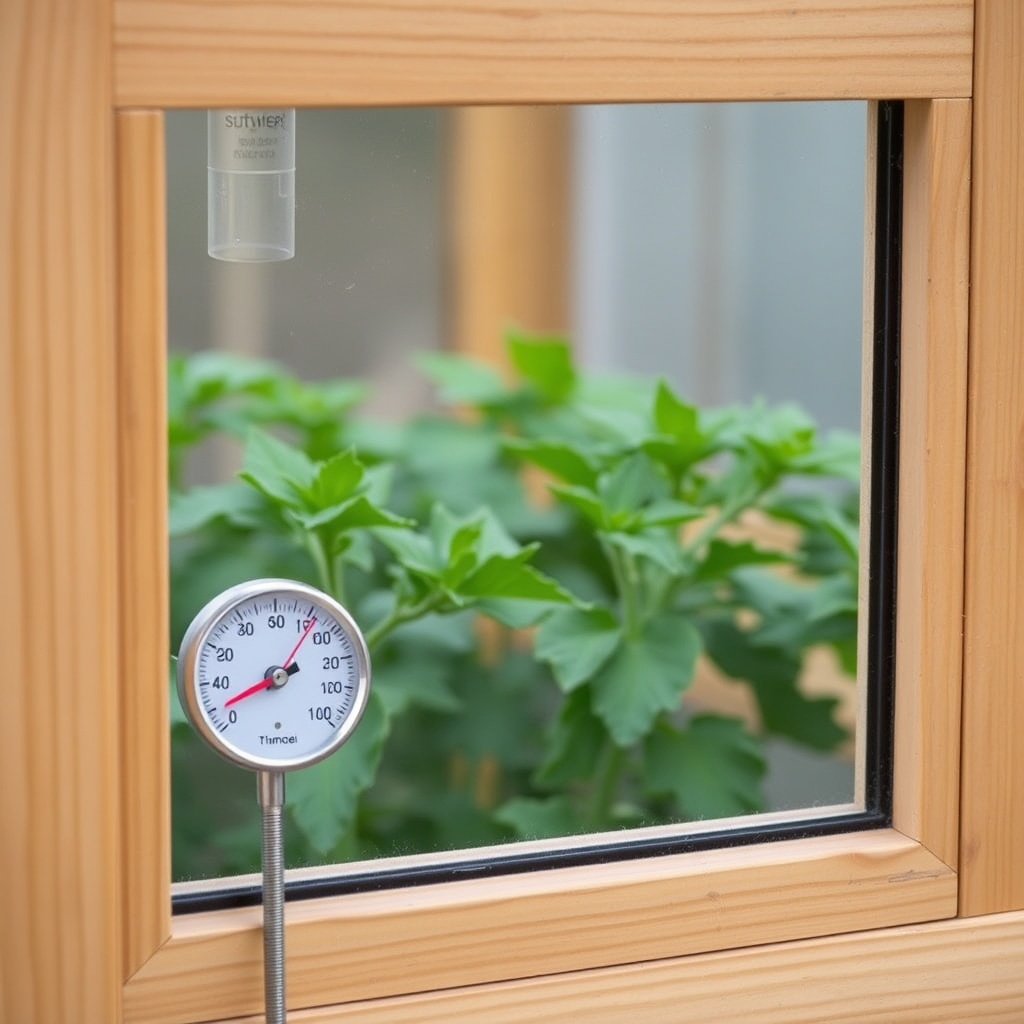
To diagnose, use a max-min thermometer placed at plant height. If temperatures exceed 30°C for more than 2 hours daily, ventilation is insufficient. Similarly, humidity above 80% for extended periods promotes botrytis. Automatic vent openers alleviate both issues by modulating airflow based on temperature, but they don’t address humidity directly. For that, consider a small hygrometer and a solar- powered extractor fan as a second line of defence.
Frequently Asked Questions
Q: Can I use a solar-powered fan instead of an automatic vent opener?
A: Yes, but it won’t be as effective for temperature regulation. Solar fans (GBP 20-40) run only when the sun shines, which coincides with heat buildup. However, they move less air than a wax-cylinder opener and require proper sealing around the mounting hole. For best results, use both: a solar fan for active cooling and an automatic vent for passive ventilation.
Q: How do I clean and maintain the automatic vent opener?
A: Wipe the wax cylinder with a damp cloth annually to remove dust and debris. Check the mounting brackets for rust or corrosion, especially on the Riverstone 6×8 Wooden Greenhouse’s wooden frame. Lubricate pivot points with silicone spray. If the opener fails to lift the vent fully (e.g., only half-opens), the wax cylinder may need replacement—a new unit costs around GBP 20-25.
Q: Does the Riverstone 6×8 Wooden Greenhouse come with pre-drilled holes for a vent opener?
A: No, the stock roof vent uses a manual stay-prop with pre-drilled holes for that stay. You’ll need to drill two 8mm holes in the aluminium vent frame to mount the automatic opener bracket. Use stainless steel screws and seal the holes with silicone. See our guide on automatic roof vent opener installation for step-by-step instructions.
Q: What is the ideal internal temperature for a greenhouse in summer?
A: For most vegetables (tomatoes, peppers, cucumbers), the ideal daytime range is 21-27°C. Above 30°C, photosynthesis slows and fruit set drops. Night temperatures should stay above 12°C. The automatic vent opener should be set to open at 20-22°C and close at 18°C, maintaining this range effectively.
Q: Can I retrofit a second louvre window to improve airflow?
A: Yes, Riverstone sells a matching louvre kit (GBP 22-28). You’ll need to cut a rectangular opening in the side panel, install the louvre frame, and seal with silicone. This adds 0.1m² of vent area. Alternatively, you can create a vent in the opposite gable end for cross-draft. For DIY advice, see our guide on DIY assembly tips.
Q: Does automatic ventilation affect winter heating costs?
A: Yes, it can. If the vent opens on a warm winter day, precious heat escapes. To mitigate, use a vent opener with a higher opening temperature (e.g., 25°C) or install a manual override lock for winter. Alternatively, combine with a heater. For cold-weather strategies, read our guide on best heating solutions for cold climates.