Palram Canopia Harmony 6×8: Installing Heat Retention Curtains for Energy Savings
For greenhouse owners, heating costs during colder months can quickly outweigh the benefits of extended growing seasons. The Palram Canopia Harmony 6×8 offers a solid aluminum frame and twin-wall polycarbonate panels, but even with good baseline insulation, thermal losses through the glazing at night can be significant. Installing heat retention curtains is one of the most effective, low-cost retrofits to slash heat loss by up to 70% without replacing the entire structure.
Why Install Heat Retention Curtains in a Palram Canopia Harmony 6×8?
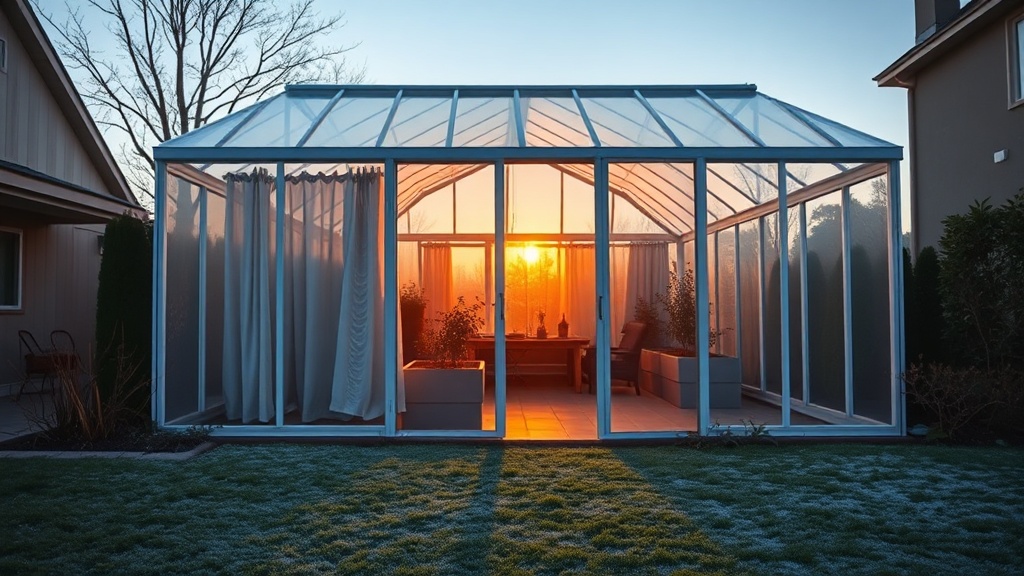
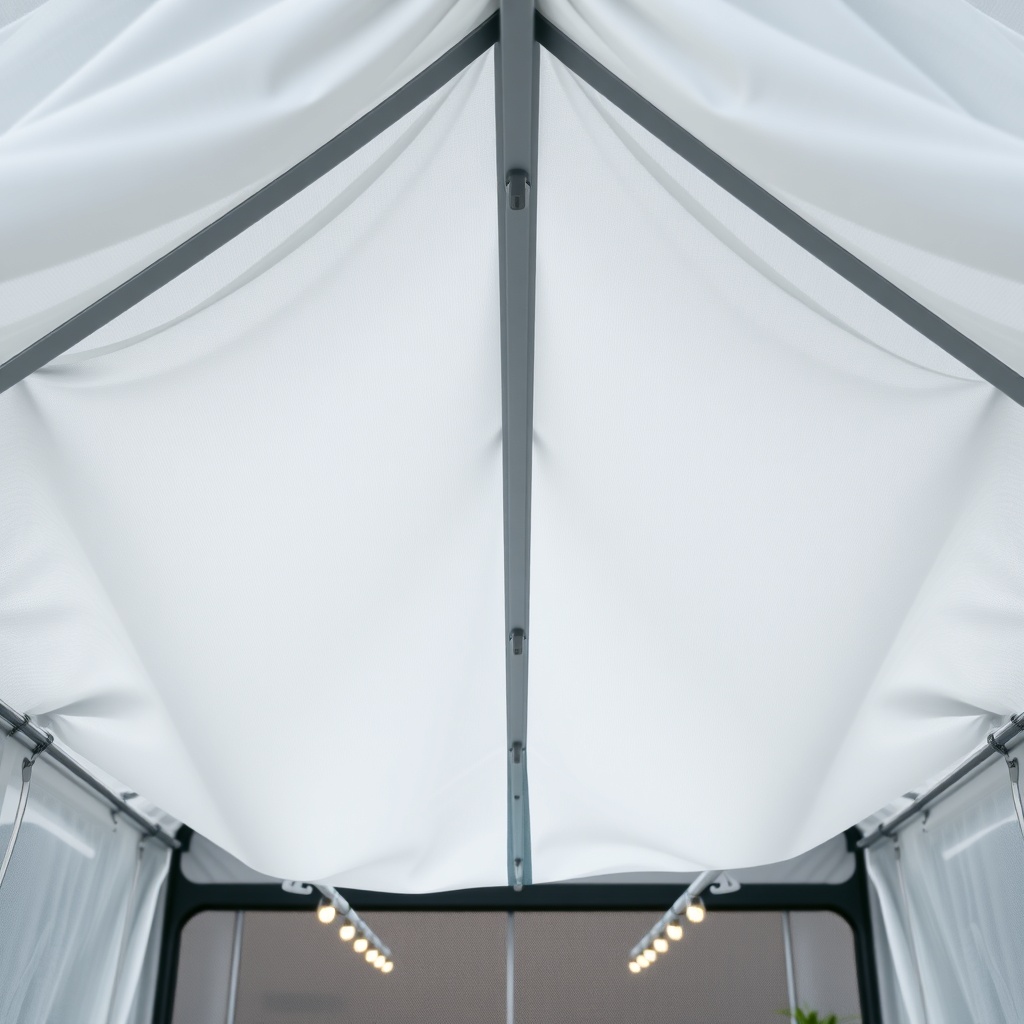
The Palram Canopia Harmony 6×8 measures roughly 1.8 m x 2.4 m (6 ft x 8 ft) with a total growing footprint of about 4.3 m² (46 ft²). Its standard 4 mm twin-wall polycarbonate provides an R-value around 1.8, which is decent for mild climates but inadequate for sustained winter growing in regions where overnight temperatures drop below freezing. Heat retention curtains—often made from aluminized polyester or woven thermal fabric—create an additional dead air space between the greenhouse roof/walls and the plants. This secondary barrier can boost the effective R-value to over 4.0, dramatically reducing the energy required to maintain 10–15°C (50–59°F) inside. Without curtains, a small electric heater might run 12–14 hours per day; with curtains, runtime can drop to 4–6 hours, cutting monthly heating bills by £30–£60 (€35–€70) depending on local rates.
What Type of Curtain Material Works Best for This Greenhouse?
Not all curtain fabrics perform equally. For the Harmony 6×8, the most practical options are:
- Aluminized shade cloth (70–90% opacity): Reflects radiant heat back to the ground. Typical cost: £8–£12 per m² (€9–€14 per m²). Provides good thermal benefit but reduces light transmission during daytime if left closed.
- Thermal fleece (woven polyester): Non-reflective but offers excellent convective barrier. Cost: £5–£8 per m² (€6–€9 per m²). Needs to be opened daily; heavier materials may require stronger support rods.
- Bubble wrap insulation: Cheapest option at £3–£5 per roll (approx. 10 m²), but less durable and can sag. Suitable for temporary winter use only.
For a permanent, automated solution, many UK and European gardeners choose aluminized curtain fabric because it balances weight (approx. 80–120 g/m²) and thermal performance. The Harmony’s ridge height of 1.95 m (6.4 ft) means curtains should be mounted at least 15 cm below the ridge beam to avoid interfering with ventilation tracks.
How to Install Curtain Tracks and Mounting Points in the Harmony 6×8
The aluminum framework of the Palram Canopia Harmony 6×8 is T-slot based, which makes attaching curtain tracks straightforward. You will need:
- Curtain track (e.g., corded curtain track, 2 m length for roof, 2.4 m for each side)
- Self-tapping screws (4 mm diameter, 12 mm length) or pop rivets for aluminum
- Wire rope or tensioned cable for horizontal runs across the ridge
- Curtain clips or sliding hooks
Steps for installation:
- 1. Measure the peak-to-eave distance on one gable end (approx. 1.6 m). Cut two lengths of track to match each gable end.
- 2. Secure the track to the top of the sidewall aluminum profile using self-tapping screws every 40 cm. For the roof slope, attach the track to the underside of the roof purlins using L-brackets.
- 3. Run a cord through the track system on both sides of the ridge so curtains can be manually opened from a central point. For automated setups, a 12V linear actuator (approx. £60–£80, €70–€95) can be mounted to the ridge beam.
- 4. Hang the curtain fabric using slide hooks and thread the draw cord.
Ensure the curtain extends at least 20 cm below the base of the wall to seal against drafts. For doors, install a separate vertical curtain track on the doorframe; leave a 50 cm gap near the automatic vent opener if you have one—read more about automatic vent opener compatibility to avoid obstruction.
Can Heat Retention Curtains Replace Upgrading to Twin-Wall Glazing?
Short answer: No. Curtains complement glazing upgrades but do not replace them. The Harmony 6×8 comes standard with single-wall polycarbonate (4 mm thickness). Upgrading to twin-wall panels (10 mm) yields an R-value of about 2.5—a 39% improvement. Adding curtains to twin-wall panels pushes the effective R-value beyond 5.0. However, if you already have the standard glazing, curtains alone reduce heat loss by 50–70%. For sustained winter production in hardiness zones 7 or lower, upgrading to twin-wall glazing is recommended first, then adding curtains as the second layer. The table below compares the three configurations:
| Configuration | Average R-Value (m²·K/W) | Night Heat Loss (W/m² at ΔT=20°C) | Annual Heating Cost (UK, 15p/kWh) | Installed Cost (Approx. GBP) |
|---|---|---|---|---|
| Standard 4 mm single-wall polycarbonate | 1.8 | 111 | £85–£120 | £0 (existing) |
| Standard glazing + thermal curtain | 4.2 | 48 | £35–£55 | £50–£100 |
| Upgraded 10 mm twin-wall + thermal curtain | 5.5 | 36 | £20–£35 | £180–£280 |
Data based on 4.3 m² surface area, 12-hour night period, UK average winter conditions.
What Thermal Performance Gains Can You Expect in Winter?
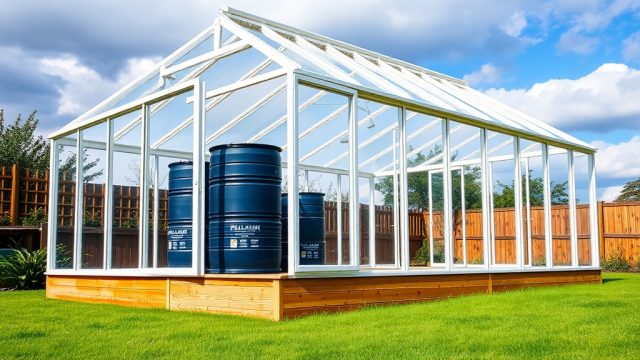
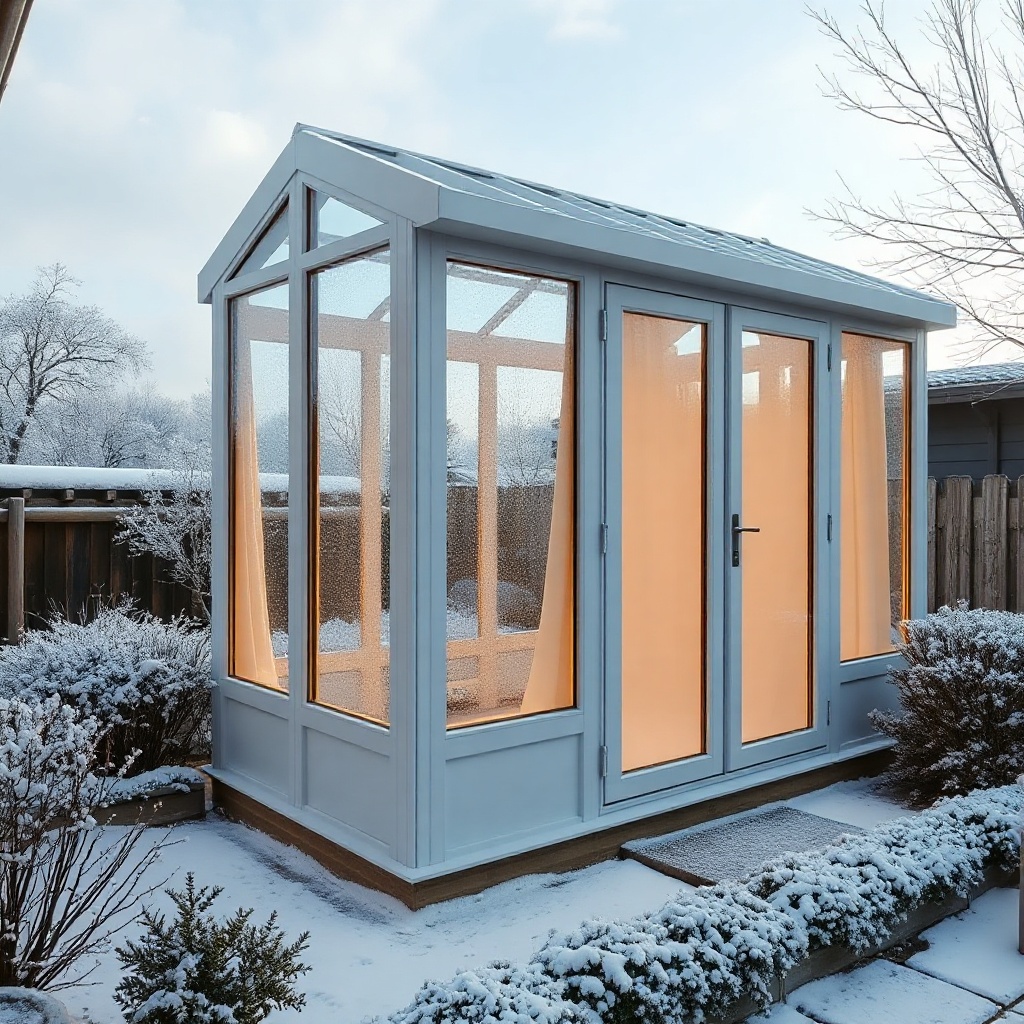
With a properly sealed curtain system, overnight temperature retention improves by 4–8°C (7–14°F) compared to an uncurtained greenhouse. For example, if external temperatures drop to -5°C (23°F), an uncurtained Harmony 6×8 with standard glazing and a 500W heater will maintain around 8°C (46°F). With the same heater and curtains drawn, interior temperature holds at 14–16°C (57–61°F). This reduces the risk of frost damage to cold-hardy crops like kale, spinach, and chard. Even in milder weather (external lows around 5°C), curtains eliminate the need for supplemental heating entirely, saving £2–£4 per week. The thermal mass from the gravel floor or water barrels also benefits from retained heat—pairing curtains with passive solar heating methods can push interior lows above freezing without any active heater.
What Owners Say About This Modification
Gardeners using the Palram Canopia Harmony 6×8 consistently praise the curtain installation as a “game-changer” for early spring and late autumn growing. A UK-based owner from Yorkshire shared that after adding aluminized curtains, they reduced their thermostat setting from 15°C to 10°C in November and still saved £48 over three months. Another user in Germany noted that curtains eliminated condensation dripping on seedlings because they created a vapor barrier. Common challenges include cutting the fabric to exact size—allow 5% extra for sagging—and ensuring the curtain doesn’t block the automatic vent opener. For those looking to maximize every inch, vertical gardening setups can be integrated beneath the curtain line without interference. Some owners also install a second curtain layer over the door to create a thermal vestibule.
Frequently Asked Questions
1. Can I use standard household curtain tracks in the Harmony 6×8?
Yes, but only if they are rated for outdoor use (UV-stabilized plastic or anodized aluminum). Standard indoor tracks will warp within 6 months due to moisture and temperature swings. Use track sections no longer than 2 m to avoid bowing.
2. How do I prevent the curtain from blocking ventilation louvers?
Install curtain tracks at least 10 cm below the base of any louvered vent. For Harmony’s gable vent, mount the curtain on a separate wire that clears the vent opening by 5 cm. Alternatively, use a two-panel curtain that opens from the center.
3. Will curtains make the greenhouse too dark for plants?
Only if left closed during the day. Open curtains fully by 8 AM to allow maximum light. Aluminized fabric reflects light onto plants when open, increasing lower-canopy illumination by up to 20%.
4. Can I automate curtain opening and closing?
Yes. A 12V linear actuator with a thermostatic controller (approx. £80, €95) can open curtains when interior temperature exceeds 25°C and close them when it drops below 10°C. Ensure the actuator has a 300 mm stroke to cover the roof slope.
5. How do I clean the curtain fabric?
Wipe with a damp cloth and mild soap twice per season. Avoid bleach or abrasive cleaners—they damage the reflective coating. Allow fabric to fully dry before closing to prevent mold.
6. What is the payback period for installing curtains?
If you spend £70 on materials and save £35–£55 per heating season, payback occurs within 1.5–2 years. In regions with harsh winters, payback can be under one year.