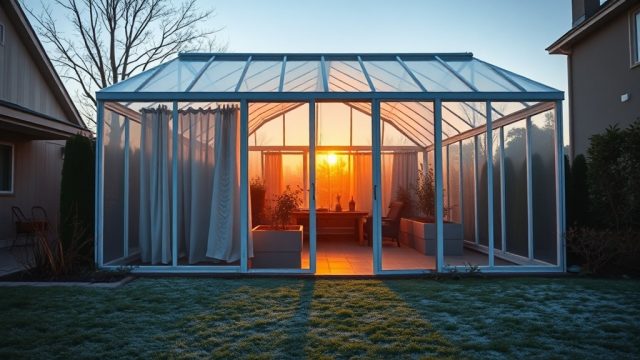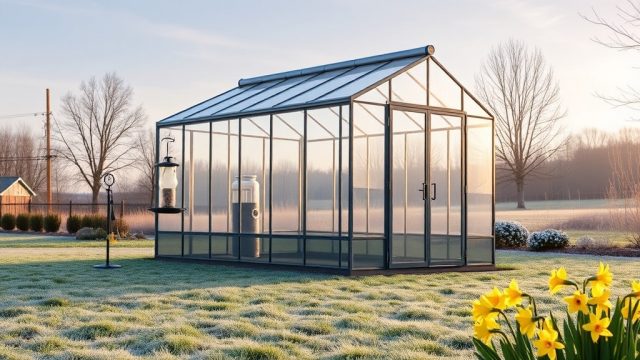

What Makes the Suncast 8×6 Tremont a Good Candidate for Insulation Upgrades?
The Suncast 8×6 Tremont is a popular resin greenhouse valued for its durability and UV resistance, but its single-wall polycarbonate panels and aluminum frame leave it vulnerable to temperature swings. Without supplemental insulation, interior temperatures can drop to near-ambient lows on frosty nights, limiting the growing season for tender crops. Upgrading insulation transforms this structure into a true four-season growing space, allowing gardeners to start seedlings earlier, overwinter perennials, and extend harvests well into autumn.
Because the Tremont uses 4mm twin-wall polycarbonate for the roof and walls, it already offers modest thermal resistance (U-value around 3.3 W/m²K). However, air leaks at seams, the door gap, and the lack of floor insulation mean that heat escapes rapidly. The primary goal of any insulation project should be to reduce heat loss through the glazing, seal infiltration points, and insulate the base. With the right approach, you can maintain interior temperatures 5–10°C (9–18°F) above outdoor lows, even when outside temperatures drop to -5°C (23°F).
Which Insulation Material Offers the Best Balance of Cost and Performance for the Tremont?
For the Suncast 8×6 Tremont, the most practical options fall into three categories: bubble wrap, reflective foil (bubble foil), and rigid polycarbonate or acrylic panels. Here’s a comparison of their key attributes for this specific greenhouse:
| Insulation Type | R-Value per Layer | Cost for 8×6 Tremont | Light Transmission | Installation Difficulty | Durability (Years) |
|---|---|---|---|---|---|
| Horticultural bubble wrap (double layer) | R-1.0 to R-1.2 | £45–£70 (GBP) / $55–$85 (USD) | 85–90% | Very easy | 2–3 |
| Reflective bubble foil (e.g., Silvershield) | R-1.8 to R-2.2 | £80–£130 (GBP) / $100–$160 (USD) | 65–75% (diffuse) | Moderate | 5–7 |
| 8mm twin-wall polycarbonate (replacement panels) | R-1.8 to R-2.0 | £300–£450 (GBP) / $370–$550 (USD) | 75–80% | Difficult (panel swap) | 10+ |
| Extruded polystyrene (XPS) rigid foam for floor | R-4.0 to R-5.0 (per inch) | £50–£80 (GBP) / $60–$100 (USD) | N/A (floor only) | Moderate | 20+ |
For most owners, a combined approach works best: use double-layer bubble wrap on the roof and upper walls (easy to install and remove), plus reflective bubble foil on north-facing walls and the door to minimize heat loss. Add rigid foam board to the base perimeter and under the gravel or floor pavers to stop ground chill. This mix typically costs under £150 ($185) and delivers an overall thermal improvement that retains heat for up to 6–8 hours longer than uninsulated panels.
How Do You Properly Install Bubble Wrap Insulation Without Damaging the Resin Panels?
Bubble wrap is the most forgiving insulation for the Suncast 8×6 Tremont because it attaches with water‑based clips or magnetic strips (since the frame is aluminum, magnets work on the door tracks but not on the panels themselves). The correct method uses purpose‑made greenhouse insulation clips that grip the polycarbonate edges without piercing them. Avoid adhesive tapes—they leave sticky residue on the resin that attracts dust and may degrade the panels’ UV coating over time.
Step‑by‑step approach: measure each wall section and cut the bubble wrap 2–3 cm oversize. Push the wrap into the frame channels, then clip it every 30–40 cm using plastic clips or silicone‑coated spring clamps. For the roof, work from the ridge down, ensuring the bubbles face inward (the air pocket works best when it’s on the warm side). Leave a 5‑cm gap at the eaves ventilation flap if your Tremont has the optional roof vent—or consider an automatic vent opener to maintain airflow without manual adjustment. Seal the door perimeter with a draft‑proofing strip (foam tape, 10‑mm wide) to stop cold air sneaking in under the door.
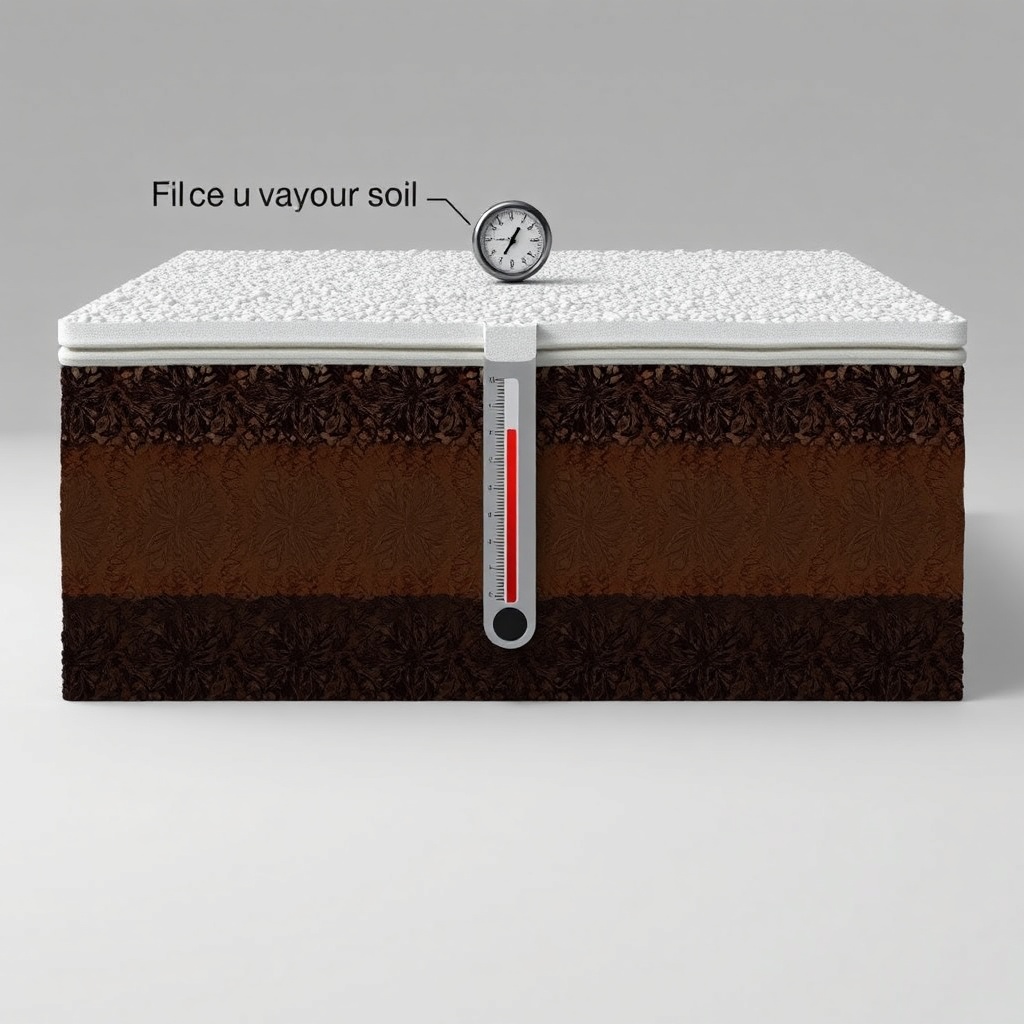
A common mistake is covering the entire interior, including the vent area, and then wondering why humidity builds up. Always leave one small vent uninsulated or install a passive ventilation cap. Condensation on the bubble wrap itself is normal—it will drip harmlessly onto the floor or onto a gravel base. For the floor, lay a vapour barrier (heavy‑duty polythene) under pea gravel to prevent ground moisture from wicking up and causing rot in bench legs.
If you prefer a more permanent solution, consider swapping the factory 4mm panels for 8mm twin‑wall polycarbonate. This requires removing the aluminum caps and sliding out the old panels—a project detailed in the maintenance guide—but it yields a higher R‑value and reduces replacement frequency.
What Is the Most Effective Way to Insulate the Floor of the Suncast 8×6 Tremont?
The floor is often overlooked, but it can account for 15–25% of total heat loss in a small greenhouse. The Suncast 8×6 Tremont sits on a base frame that rests directly on the ground. Without insulation, cold soil acts as a heat sink, pulling warmth from the air above. Two proven methods exist:
- Perimeter foam board: Dig a 30‑cm (12‑inch) trench around the outside of the base frame, then install 50‑mm (2‑inch) extruded polystyrene (XPS) board vertically against the foundation. Backfill with gravel. This reduces heat loss through the base and keeps the soil inside 2–3°C warmer.
- Interior rigid foam with a topping: Level the interior soil or gravel, lay 50‑mm XPS boards, cover with a heavy‑duty vapour barrier, then top with 10–15 cm of pea gravel or interlocking rubber mats. This creates a thermal break between the ground and the growing space.
Both approaches cost between £50 and £80, depending on board thickness and local supplier prices. For a budget alternative, you can use thick landscaping fabric over a 10‑cm layer of wood chips, but this rots over time and provides less thermal resistance. Pair floor insulation with a complete winterizing routine including sealing the base frame joints with silicone caulk.
How Can You Insulate the Door and Ventilation Openings to Minimize Drafts?
The Tremont’s sliding door is the single biggest source of air leakage. The gap between the door and the side panel can be 5–10 mm wide, allowing cold air to pour in on windy days. Start by fitting a self‑adhesive foam weatherstrip (E‑profile, 10‑mm wide) along the full length of the door frame. For the bottom gap, use a brush‑type door sweep that attaches to the inside of the door sill—this flexes over gravel without scraping.
For the roof vent (if installed), apply a clear silicone‑based sealant strip around the vent hinge and latch. Do not seal the vent entirely—use a thermostatic vent opener to allow automatic opening at 22–25°C and tight closure when temperatures drop. The louvered side vents (two on the Tremont) can be insulated with removable bubble‑wrap panels that attach with magnetic clips on the aluminum frame. During the coldest months, cover the louvered vents entirely with reflective bubble foil, leaving just one small passive vent (e.g., a 10‑cm diameter tube vent) to prevent carbon dioxide build‑up.
Always check the manufacturer’s warranty conditions: sealing non‑factory openings may void the panel warranty if it causes moisture entrapment. Using removable insulation avoids this risk entirely.
What Temperature Gains Can You Realistically Expect From Proper Insulation?
Real‑world tests from Suncast 8×6 Tremont owners who implemented a full insulation package (bubble wrap on walls/roof, perimeter floor foam, weatherstripping on door) report consistent interior temperatures 6–9°C (11–16°F) above outside lows. On a night when the thermometer drops to -3°C (26.6°F), the insulated Tremont holds at 3–5°C (37–41°F)—enough to protect frost‑tender perennials and keep winter lettuce alive. Without insulation, the same greenhouse would drop to -1°C (30°F) or lower, risking freeze damage.
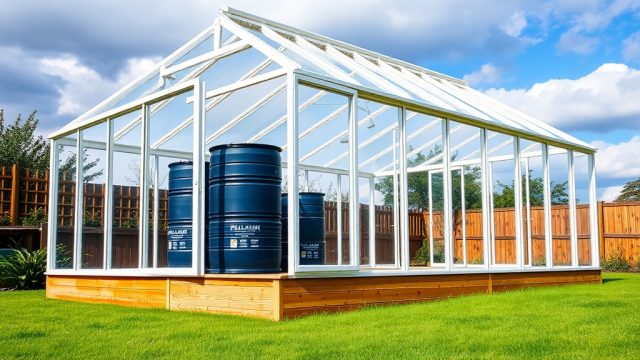
During daytime, even in cloudy conditions, solar gain raises the interior temperature to 10–15°C (50–59°F) above ambient, which is ideal for shallow‑rooted crops and seed germination. The combination of insulation and thermal mass—such as several 20‑litre water drums painted black placed in direct sun—can extend the overnight heat retention by an additional 2–3 hours. For a more active solution, see the guide on heating options for the Tremont, which covers electric tube heaters, propane units, and soil warming cables.
What Owners Say
Feedback from Suncast 8×6 Tremont owners on insulation upgrades is overwhelmingly positive, though many stress the importance of correct installation. “I added double‑bubble wrap to the entire interior and sealed the door with foam tape,” writes Mark from Yorkshire (UK). “My heater used to run every 20 minutes. Now it cycles every 2 hours. Saved me about £5 a week in electricity during January.” Another owner, Elena from Ontario, Canada, combined floor foam with a soil warming cable: “My seedlings germinated at 15°C when the outside was -12°C. The key was sealing every gap—I found four spots where cold air came through the base frame.”
Some owners caution against over‑insulating. “I covered the vents without thinking,” says James from Oregon (US). “Within two days, I had powdery mildew on my basil. You need to leave one trickle vent or use an automatic opener.” The consensus is that insulation pays for itself in energy savings within one winter, especially if you are using electric heat. For those relying solely on passive solar gain, insulation extends the usable season by about 6–8 weeks in spring and autumn.
Frequently Asked Questions
Can I use ordinary household bubble wrap in my Suncast 8×6 Tremont?
Yes, but horticultural‑grade bubble wrap (UV‑stabilized) is recommended because it holds up to sunlight and condensation for 2–3 seasons. Ordinary packing bubble wrap degrades within one season and sheds plastic fragments.
Will insulation reduce light transmission to my plants?
All insulation reduces light to some degree. Double‑layer bubble wrap cuts about 10–15% of light, which is acceptable for most vegetables and ornamentals. Reflective foil reduces more (25–35%), so restrict it to north‑facing walls or areas without direct sun exposure.
Do I need to insulate the roof as well as the walls?
Yes—the roof is the largest surface area for heat loss, especially on clear nights. Insulating the roof with bubble wrap or a secondary layer inside the roof panels gives the biggest single improvement in temperature retention.
How do I stop condensation from damaging my plants?
Condensation on insulation is normal. Ensure the bubble wrap is installed with the bubbles facing inward (the flat side out). Wipe interior surfaces weekly with a mild fungicide solution (e.g., 1 part vinegar to 10 parts water). Use a small fan to keep air moving.
Can I heat the Suncast 8×6 Tremont with only insulation and no heater?
If you live in a climate where winter lows are consistently above -2°C (28°F), passive insulation plus thermal mass (water barrels, bricks) can keep the interior above freezing. For colder regions, a small 500‑watt heater with a thermostat is recommended.
How do I insulate the Tremont if I plan to use a heating cable?
Lay the floor insulation first (foam board + vapour barrier), then run the heating cable on top of the vapour barrier under a shallow layer of sand or gravel. This creates a warm root‑zone without wasting heat on the ground. See the automatic watering guide for tips on integrating irrigation with heating cables.