Introduction
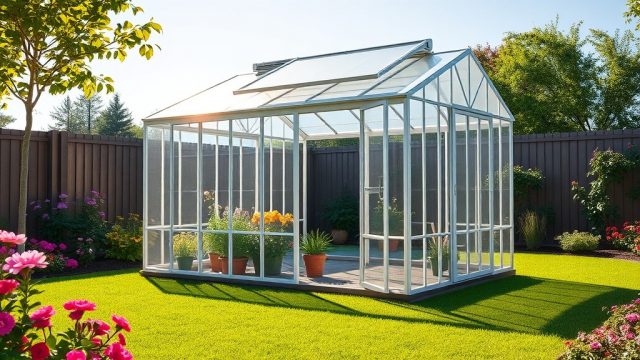
The Suncast 8×6 Tremont greenhouse offers a compact yet versatile growing space for hobbyist gardeners, but its standard ventilation can struggle during peak summer months. Without active air movement, stagnant heat can stunt plants and invite fungal issues. This article guides you through building a custom fan system tailored to the Tremont’s 8×6 footprint, ensuring consistent airflow and temperature control.
Why Does the Suncast 8×6 Tremont Need a Custom Fan System?
The factory ventilation on the Tremont consists of a single roof vent and a louvered side panel, which may be insufficient for removing hot air trapped under the polycarbonate panels during midday sun. Without supplemental fans, temperature spikes above 95°F (35°C) can occur, stressing tomatoes, peppers, and leafy greens. A custom fan system addresses three critical issues: stagnant air pockets near the ridge, uneven humidity distribution, and reduced CO₂ replenishment for actively growing plants. By adding fans, you create a consistent breeze that strengthens stems and prevents condensation on leaves—a common trigger for powdery mildew in humid climates.
What Fan Types Work Best for the Tremont’s 8×6 Space?
Selecting the right fans for your custom system involves balancing airflow volume (CFM) with power consumption and noise. Below is a comparison of the top options for the Tremont, based on typical 48-square-foot volumes.
| Fan Type | CFM Range | Price (USD) | Best For | Install Effort |
|---|---|---|---|---|
| 6-inch axial circulation fan | 200–400 CFM | $30–$55 | Horizontal air mixing, gentle breeze over plants | Low (mount to frame) |
| 4-inch inline duct fan | 80–150 CFM | $25–$45 | Exhaust through roof vent or side louver | Moderate (ducting required) |
| 12-volt PC-style muffin fan | 80–120 CFM | $15–$30 | Low-noise, solar-compatible circulation | Low (screw to frame, DC adapter) |
| Oscillating wall-mounted fan | 250–500 CFM | $60–$90 | Full-zone air movement, adjustable direction | Moderate (wall bracket) |
For most Tremont owners, a combination of one 6-inch axial circulation fan near the peak and a small inline fan for active exhaust provides optimal air exchange. Use a CFM rating roughly equal to the greenhouse volume (approx. 350 cubic feet for 8x6x7 ft) for replacement every 2–3 minutes.
How Do You Plan the Fan Placement for Even Air Distribution?
Placement dictates whether your fans create dead zones or uniform airflow. For the Tremont’s rectangular shape, position one circulation fan on the upper north wall (opposite the door) to push air along the ridge line. This prevents hot air from pooling at the apex. Place a second fan at plant height on the south wall (near the glazing) to direct air across foliage, simulating a natural breeze that strengthens cell walls. For exhaust, install the inline fan in the roof vent opening or mount it to the side louver after removing the manual crank. Use a backdraft shutter to prevent passive air loss when the fan is off. Keep intake gaps low on the opposite side—e.g., crack the door or a lower louver—to create a crossflow path from bottom to top.
If you plan to upgrade glazing for better insulation, see our guide on Suncast 8×6 Tremont: Upgrading to Twin-Wall Polycarbonate Glazing for Better Insulation, which pairs well with active ventilation to reduce condensation.
What Are the Step-by-Step Installation Steps for a DIY Fan System?
Follow these steps to install a dual-fan system in your Tremont. Tools required: drill with 1/8-inch and 3/16-inch bits, screwdrivers, wire cutters, cable ties, and silicone sealant.
- Step 1: Mount the circulation fan. Attach the fan bracket to the aluminum frame using stainless steel self-tapping screws. Position it 6 inches below the ridge on the north wall, angled 15 degrees downward to push air across bench tops. Run low-voltage wire (or plug cord) along the frame to a GFCI-protected outlet.
- Step 2: Install the exhaust fan. Remove the roof vent mechanism if present. Mount the inline fan outside the vent opening using a mounting plate or zip ties to the frame. Connect 4-inch flexible duct from the fan through the vent hole; seal gaps with silicone. Install the backdraft damper on the outside end.
- Step 3: Wire the control system. Use a dual-stage thermostat controller (approx. $40–$70) that turns the exhaust fan on at 80°F (27°C) and the circulation fan at 85°F (29°C). Alternatively, use a simple timer for the circulation fan to run 15 minutes every hour. Always use outdoor-rated wiring and waterproof connections.
- Step 4: Add intake vents. To balance air pressure, cut two 3-inch holes low on the door or side panel, cover with mesh, and install a sliding shutter. This allows fresh air in while excluding insects.
- Step 5: Test and adjust. Run both fans and use a smoke pencil or incense to visualize airflow. Adjust fan angles until you see air moving over all benches. Check temperature variation with a digital thermometer—aim for less than 5°F between peak and floor.
How Do You Power and Automate the Fans Efficiently?
Power options vary based on your grid access. For outlets within 25 feet, use a 14-gauge outdoor extension cord connected to a GFCI breaker. For off-grid setups, pair 12-volt DC fans with a 100W solar panel and charge controller—this works well for the Tremont’s small volume. Automation is key: install a thermostat controller (e.g., Inkbird ITC-308) with a probe placed in the warmest spot (near the ridge). Set the activation temperature 5°F above ambient to avoid short cycling. For humidity control, add a humidistat that triggers the exhaust fan when relative humidity exceeds 75%. Some users integrate their fan system with smart plugs—control fans via phone app or schedule them to run during peak sun hours (10 AM–4 PM).
If combining fans with heating systems for early season use, check our article on Suncast 8×6 Tremont: Heating Solutions for Early Spring Planting to avoid heat loss from over-ventilation.
What Owners Say About Their Custom Fan Systems
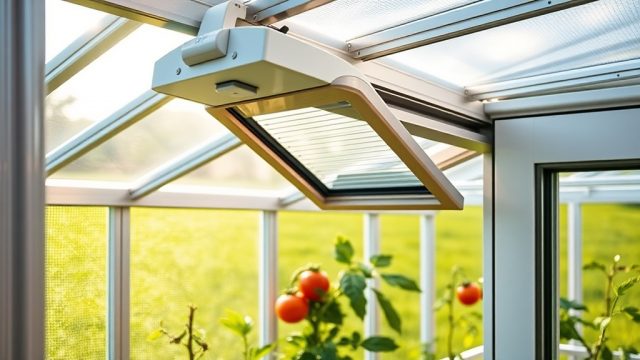
Gardeners who have installed custom fan systems on the Suncast 8×6 Tremont report significant improvements in plant health and temperature stability. Jennifer from Vermont noted, “After adding a $35 6-inch fan near the roof, my tomato seedlings stopped wilting during 90°F afternoons. The difference was night and day.” Mark from Texas shared, “I built a combination unit with a 200 CFM exhaust fan and a lower intake louver. Now my cucumbers grow without blossom-end rot—it’s all about the moving air.” On the GreenhouseGuru forum, several users recommend coupling fans with automated vent openers for passive cooling synergy. “My fans work with the Suncast 8×6 Tremont: Automatic Vent Opener Installation and Benefits guide—the combo keeps my peppers happy,” wrote Cathy from Oregon. One caution emerged: “Don’t forget to clean fan blades monthly; dust buildup reduces airflow by 30% in six weeks.”
Frequently Asked Questions About the Custom Fan System
Q1: Can I use a single fan for both circulation and exhaust in the Tremont?
A: It’s not recommended. A single fan cannot both mix air horizontally and expel hot air upward. Use at least two fans—one for circulation, one dedicated for exhaust—for effective temperature and humidity control.
Q2: What size ducting works with the Tremont’s factory roof vent?
A: The standard roof vent opening measures roughly 8 by 12 inches. Use a 4-inch round duct with a transition plate to match the opening. If you modify the vent frame, ensure the seal remains watertight.
Q3: Will running fans at night lower humidity too much?
A: Yes, in cold weather. Use a humidistat to disable fans below 60% relative humidity at night to prevent over-drying. For seed starting, low humidity can stress seedlings; consider a humidifier if needed.
Q4: How do I prevent rain from entering through the exhaust fan?
A: Install a rain hood or 90-degree duct elbow on the outside vent. Most inline fans come with a weather-resistant cap. Also seal all joints with silicone caulk rated for polycarbonate.
Q5: Can I connect fans to a drip irrigation system’s timer?
A: Not directly—fans require 110V or 12V power, not low-voltage irrigation wiring. However, you can use a smart controller that integrates both irrigation and fan schedules. Our Suncast 8×6 Tremont: Automatic Drip Irrigation Setup and Benefits guide covers standalone systems.
Q6: Do fans affect the warranty on the Tremont greenhouse?
A: Modifying the frame (drilling holes) may void the warranty on the affected panels. Many users install fans without drilling by using clamp-on brackets or existing threaded inserts. Check your manual before making permanent changes.
Conclusion
Installing a custom fan system in your Suncast 8×6 Tremont is a cost-effective upgrade that prevents heat stress and molds while promoting vigorous growth. With proper fan selection and placement, you can keep temperatures within the ideal 70–80°F range even in summer. Combine your fan setup with smart controllers and nearby upgrades like Suncast 8×6 Tremont: Bench and Planter Combo Ideas for Space Saving or Suncast 8×6 Tremont: Beginner’s Guide to Seed Starting Shelves for a fully optimized greenhouse.