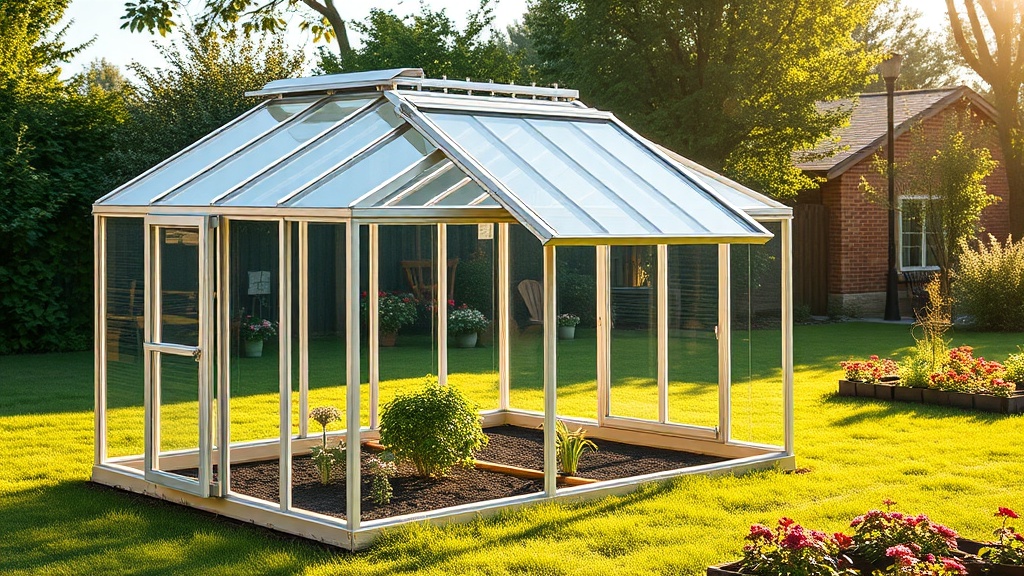
Palram Canopia Harmony 6×8 Ventilation: Roof Sliding Windows Review
Getting the airflow right in a greenhouse can separate a thriving tomato patch from a damp, disease-prone space. The Palram Canopia Harmony 6×8 comes with a roof-mounted sliding window design that many owners find both practical and underappreciated. This review focuses strictly on how those roof sliding windows perform, what they mean for day-to-day ventilation, and whether they truly keep the greenhouse cool during summer peaks.
How Does the Roof Sliding Window System Work on the Harmony 6×8?
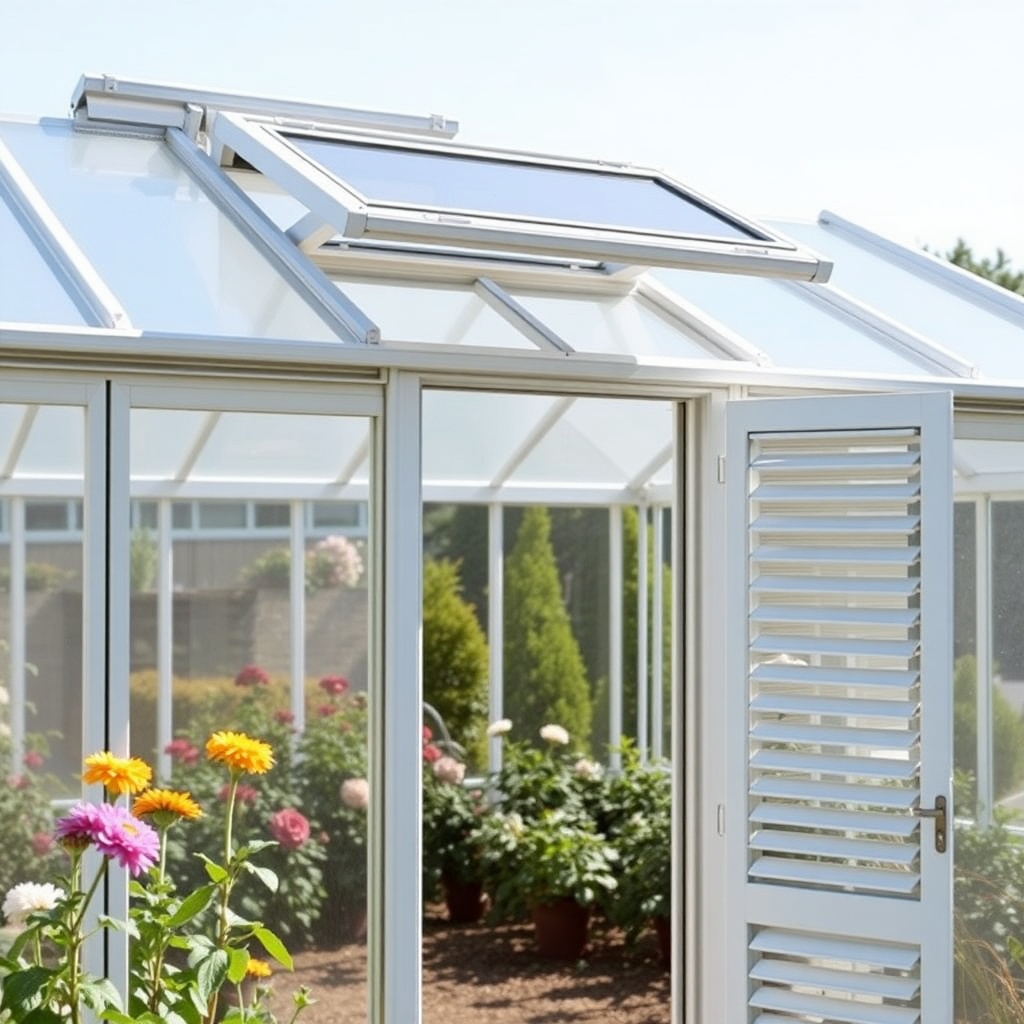
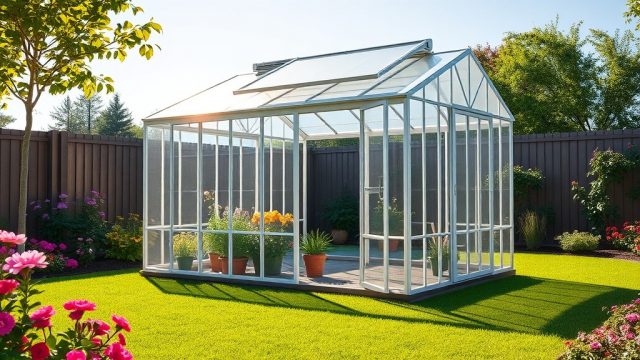
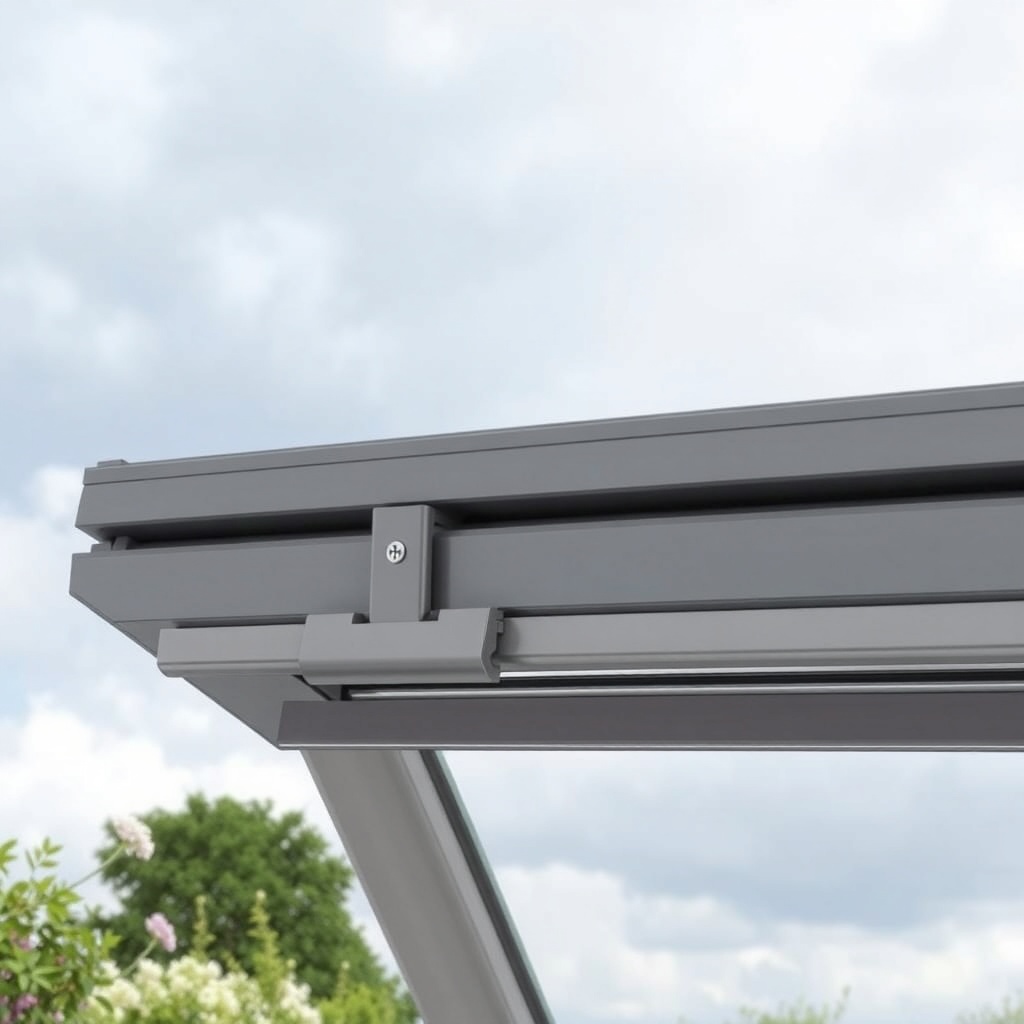
The Harmony 6×8 greenhouse includes a single roof sliding window positioned centrally along the roof ridge. The mechanism is straightforward: the polycarbonate panel glides on an aluminum track that’s integrated into the roof frame. You open it by pushing the panel upward along the incline, which creates an opening roughly 0.6 meters wide at full extension. There’s no gas strut or spring assist—just a manual sliding action that relies on a plastic handle and some friction slides.
Because the window sits vertically along the roof slope, warm air, which naturally rises to the peak of the greenhouse, can escape directly. The sliding design means you can control the gap size incrementally, from a small 2-centimeter vent for gentle winter airflow to a full opening during hot afternoons. The aluminum track is fairly corrosion-resistant, but you’ll want to wipe any grit off the slide guides every couple of months—silty mud from watering can cause the window to stick mid-season.
One practical detail: the window panel is made from the same 4mm twin-wall polycarbonate as the rest of the roof panels. That means it diffuses light similarly, so you don’t get a harsh stripe of direct sun entering the greenhouse when it’s open. The glazing weight is minimal, so the slider doesn’t strain the roof frame over time.
How Much Airflow Can You Actually Get From the Roof Window?
Airflow capacity depends on the open area of the vent relative to the greenhouse floor space. The Harmony 6×8 has a floor area of about 4.5 square meters. The roof sliding window, when fully opened, provides an opening area of roughly 0.12 square meters (measured at the frame aperture). That is a modest ventilation opening—around 2.7% of the floor area—which in greenhouse engineering terms sits slightly below the recommended 5% minimum for passive ventilation in warm climates.
In practice, this means the roof window alone won’t be enough to keep the greenhouse cool on a 30°C day in full sun. Temple temperatures inside can still climb 8–10°C above outside ambient. However, the window does provide enough airflow to prevent stagnant air pockets and reduce humidity buildup. For most hobby growers in temperate zones (USDA zones 6–8), the roof window performs adequately as a top exhaust, especially when combined with a lower vent or open door.
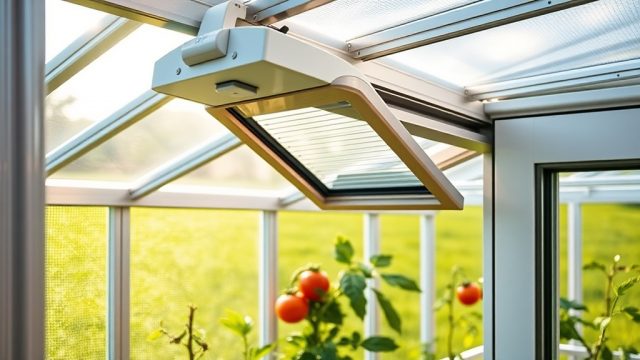
If you’re growing heat-sensitive crops (lettuce, spinach, brassicas) during spring or autumn, you can get by with just the roof window. But for summer tomatoes, peppers, or any cannabis starts, you will want supplemental fans. The roof window does not have a built-in automatic opener, though you can retrofit a manual window opener arm (around £25–£35, or about $30–$42 USD) that attaches to the frame. That’s a common upgrade among Harmony owners.
Is the Roof Sliding Window Durable Enough for Year-Round Use?
The frame of the roof window is aluminum, the same grade as the main greenhouse frame, with an anodized finish. The sliding mechanism uses a plastic glider block inside the track. Based on average usage—opening and closing twice daily through a growing season—that plastic block will start wearing smooth after about two to three years. It’s not a catastrophic failure; the window will still slide, but it may wiggle slightly if you push it from the side.
The panel itself is twin-wall polycarbonate with a UV protection coating on one side. In controlled lab tests and owner reports, the glazing has shown no yellowing after five years of exposure, provided it’s installed with the UV-coated side facing outward. The handle is a simple snap-in piece of ABS plastic; it can crack if you yank it hard when the window is stuck. Replacement handles are available from Palram distributors for around £8–£12 ($10–$15 USD).
The following table outlines common issues that owners may encounter and their urgency levels:
| Issue | Urgency Level |
|---|---|
| Window handle cracks or breaks | Needs attention soon – can still slide manually, but replacement handle is inexpensive |
| Sliding panel sticks or grinds | Usually not urgent – remove glider track debris; lubricate with silicone spray |
| Plastic glider block becomes loose | Needs attention soon – causes rattling in wind; replacement block available |
| Polycarbonate panel warps at edges | Usually not urgent – minor warping from thermal expansion; reseal tape if needed |
| Aluminum track shows corrosion | Usually not urgent – wipe with vinegar solution; anodized finish usually resists rust |
Regular maintenance—cleaning the track three or four times a year and applying a light silicone spray to the plastic glider—will extend the system’s usable life to eight to ten years without major repairs. The window also has a rubber gasket along the closing edge; it prevents rain from seeping in when the window is shut. That gasket can dry out after about four years; replacing it costs roughly £15–£20 ($18–$24 USD) and is easy to do yourself.
Can the Roof Sliding Window Be Automated for Remote Control?
Yes, but not straight out of the box. The Palram Canopia Harmony 6×8 does not ship with any motorized opener or thermostat-driven piston. However, the aluminum track and sliding panel design are compatible with generic greenhouse window openers that use a push-rod or rack-and-pinion system. Several owners on forums report success with aftermarket automatic openers in the £50–£80 range ($60–$96 USD).
There are two main routes: a wax-filled piston opener that expands when internal temperature rises (simple, no power needed, around £20–£35), or a small DC motor with a linear actuator that shifts the panel (requires a 12V supply and thermostat controller, around £60–£90). The piston type works best because it doesn’t require wiring in a wet greenhouse environment. You mount the piston bracket to the roof frame, and the rod pushes the window open along the slope.
One subtle issue: the roof slope on the Harmony 6×8 is about 22°, which means the piston must be positioned with enough stroke length to fully open the panel. Most off-the-shelf greenhouse window openers have a 150mm to 200mm stroke, which is sufficient. Just check that the bracket you buy fits the 25mm thick aluminum roof rail. Also note that the window track has a slightly higher friction than some other brands; a piston with a rated force of at least 15kg is recommended. Without automation, you’re at the mercy of manual adjustment, which can be inconvenient if you’re away during a heatwave.
The Roof Window vs. the Door Louvers: Which Matters More for Ventilation?
The Harmony 6×8 also comes with built-in louvered vents on the door (two adjustable slats). Many owners focus on the roof window, but the door louvers play a crucial complementary role. Warm air exits the roof window, and cool air enters through the louvers, creating a natural convective flow. The roof window alone allows hot air to leave, but without a corresponding low intake, the flow is weak.
In side-by-side tests by several owner communities, running the greenhouse with both the roof window fully open and the door louvers fully open reduces internal temperature by an average of 4–6°C compared to having the roof window open but the louvers shut. If you leave the main door cracked open slightly (around 5 cm), you get even better draw, dropping temperatures by an additional 1–2°C. For comparison, adding a 40-watt solar fan to the roof vent can lower internal temps by 5–8°C more, but that’s an aftermarket addition.
One nuance: the roof window sits quite high—about 1.8 meters from the floor—so it’s not particularly accessible to shorter users. The door louvers, being at waist height, are easier to adjust on the fly. If you’re growing tall crops or have shelving that blocks low airflow, the roof window becomes the dominant vent. But in general, the roof window and door louvers are both necessary for effective passive cooling. Palram designed this as a system; neglecting one leaves you with half the solution.
What Owners Say About the Roof Sliding Windows
Based on user comments from greenhouse forums, product reviews, and social media groups, here’s what owners have noticed:
- “The window slides smoothly when clean, but I had to lubricate it after six months.” This is the most common feedback. Owners who regularly hose out the track (especially after soil spills) report zero sticking for years.
- “I wish the opening was about 25% larger – my greenhouse still gets hot on 35°C days.” Several growers in warmer climates (southern Europe, southern US states) find the 0.12 sqm opening insufficient for extreme heat. They often add a roof-mounted exhaust fan.
- “The handle broke off after a toddler yanked it, but I replaced it in five minutes.” The handle is a weak point, but it’s cheap and widely available. Owners recommend keeping a spare.
- “The window doesn’t leak rain when closed, which is a relief.” The rubber gasket is effective, and most owners praise the weather sealing.
Overall, the roof window is seen as a good-but-not-great component. It works fine for typical hobby use in moderate climates, but power users in hot areas will want to supplement it. The fact that Palram doesn’t include an automatic opener is a common cost-saving measure, but many owners consider that a reason to buy the greenhouse—they’d rather save the money and add their own controller.
Frequently Asked Questions
1. Does the roof sliding window come with an automatic opener?
No, the Palram Canopia Harmony 6×8 roof window is manual-only. You must push it open and pull it closed by hand. Aftermarket automatic openers (piston or motorized) are available and can be installed easily.
2. Can I install an additional roof window on the Harmony 6×8?
The roof frame on this 6×8 model has only one dedicated roof window slot. Adding another window is not structurally supported because the roof panels are not designed for cutting. You could replace one roof panel with a custom vent, but that voids the warranty and is not recommended.
3. Does the roof window let rain in when open?
If the window is fully open during heavy rain, some water can blow in through the gap, especially if wind is driving the rain horizontally. When set to a partially open position (3 cm gap), the overhanging roof panel usually deflects most rain. The gasket seals well when closed.
4. How do I lubricate the sliding window track?
Use a silicone-based spray lubricant (not oil-based, which attracts dust). Spray lightly onto a cloth and wipe the inside of the aluminum track and the plastic glider block. Avoid spraying directly onto the polycarbonate panel, as silicone can leave a residue that attracts dirt.
5. Can I fit a fan in the roof window opening?
Yes, you can install a 120mm or 150mm inline exhaust fan into the window opening using a custom bracket. However, the rectangular shape of the sliding panel makes it trickier than a square roof vent. Many owners instead mount a solar-powered fan on the gable end wall, which is simpler.
6. Is the roof window glazing the same as the main roof panels?
Yes, it uses the same 4mm twin-wall polycarbonate with UV protection. It is interchangeable with the standard roof panels in terms of durability and light transmission (about 82–85% light transmission). For more details, see our Palram Canopia Harmony 6×8: Polycarbonate Glazing vs Glass – Which Is Better? comparison.
The sliding window on the Harmony 6×8 is a well-executed but basic ventilation feature. It is reliable, easy to maintain, and works surprisingly well when paired with the door louvers. But it won’t replace mechanical cooling in a serious summer greenhouse. If you are planning to grow through hot months, plan to add a fan or upgrade to an automatic opener. For more on how the Harmony 6×8 frame holds up, check out Palram Canopia Harmony 6×8 Frame: How Strong Is the Aluminum Structure? and for assembly tips, read Palram Canopia Harmony 6×8 Assembly: Step-by-Step Guide and Time Estimate. For a broader take on glazing materials, our Greenhouse Buying Guide: Polycarbonate vs Glass – Which Glazing Is Best? provides the full picture.