Greenhouse Buying Guide: Polycarbonate vs Glass – Which Glazing Is Best for the Palram Canopia Harmony 6×8?
Choosing between polycarbonate and glass glazing for your greenhouse is a fundamental decision that affects light transmission, insulation, durability, and long-term maintenance. For owners of the Palram Canopia Harmony 6×8, this choice directly influences plant growth outcomes and structural longevity. This guide breaks down the practical differences, helping you decide which glazing material best suits your climate, budget, and gardening goals.
How Does Polycarbonate Compare to Glass in Terms of Light Transmission for the Palram Canopia Harmony 6×8?
The Palram Canopia Harmony 6×8 uses twin-wall polycarbonate panels as its standard glazing, which transmit roughly 75–80% of incoming sunlight. This is lower than standard horticultural glass (typically 85–90%), but the polycarbonate diffuses light, reducing harsh shadows and hot spots. For plants like tomatoes, peppers, and leafy greens, diffused light can actually improve uniformity of growth.
Glass, if chosen as an alternative, provides higher direct light intensity but also creates more glare and concentrated heat, which may scorch tender seedlings. The Harmony’s polycarbonate panels are UV-stabilized, blocking harmful UVB rays while allowing UVA and photosynthetically active radiation (PAR) through. If you grow shade-loving plants or live in a high-sun region, polycarbonate’s diffusion is a net advantage. For more technical details on how these panels perform, see our full comparison in Palram Canopia Harmony 6×8: Polycarbonate Glazing vs Glass – Which Is Better?
Real-world consideration: In cloudy climates, glass may give a slight edge in brightness, but polycarbonate compensates with better thermal retention—a trade-off worth measuring in your local conditions.
What Insulation Differences Exist Between Polycarbonate and Glass in the Palram Canopia Harmony 6×8?
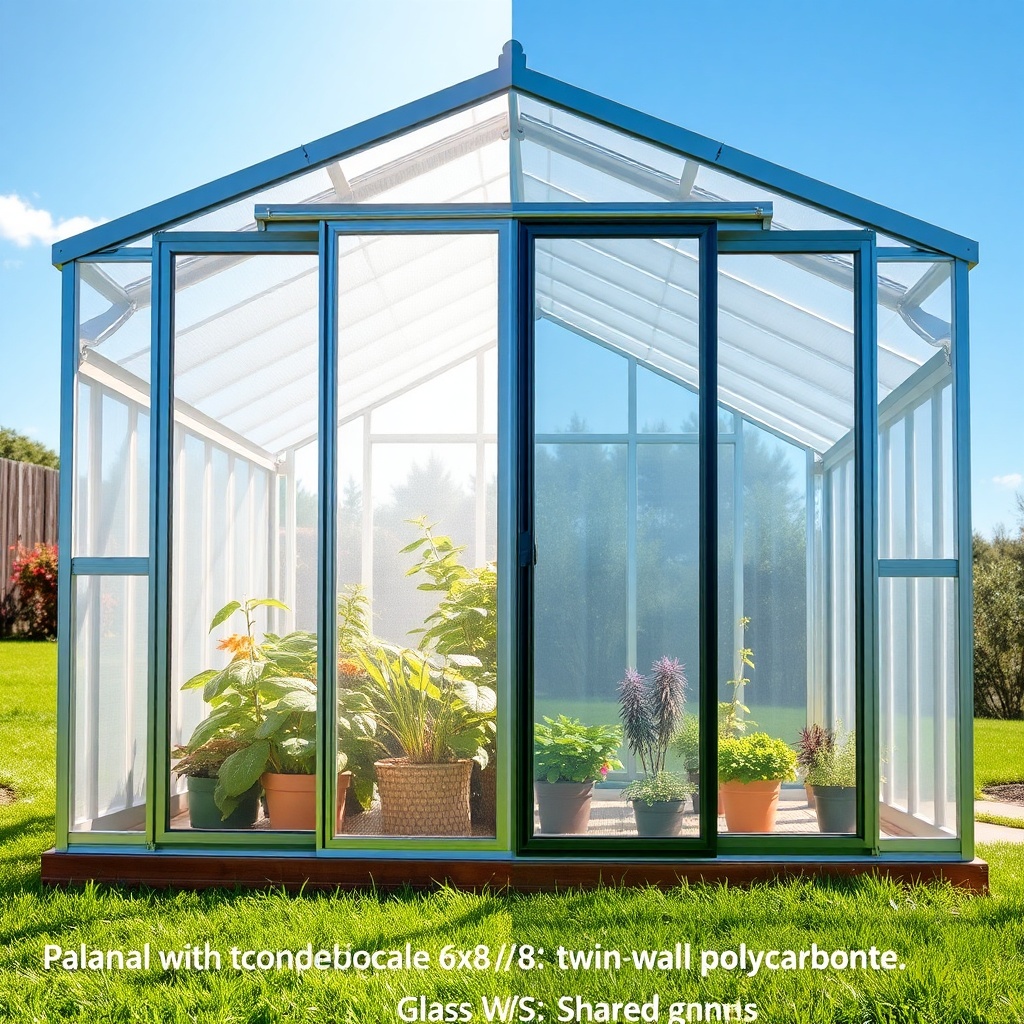
Insulation is where polycarbonate clearly outperforms glass. The twin-wall structure traps a layer of air between the two sheets, giving an R-value of approximately 1.8 to 2.0 (U-value around 2.7–3.0 W/m²K). Single-pane glass, by contrast, has an R-value of about 0.9 (U-value ~5.8 W/m²K), meaning it loses heat nearly twice as fast.
For the Palram Canopia Harmony 6×8, which has a footprint of 6×8 feet (1.8 x 2.4 m) and a peak height of 7.5 feet (2.3 m), the total glazed area is about 100 square feet (9.3 m²). In winter, polycarbonate can maintain interior temperatures 6–10°F (3–6°C) warmer than an equivalent glass greenhouse, assuming similar ventilation. This translates to lower heating costs and a longer growing season in USDA zones 5 or below.
Glass greenhouses require additional insulation such as bubble wrap or thermal curtains to match polycarbonate’s performance. The Harmony’s aluminum frame also reduces thermal bridging, but the glazing itself is the primary barrier. If you plan to heat your greenhouse, polycarbonate is the more energy-efficient choice.
Are Polycarbonate Panels More Durable and Impact-Resistant Than Glass for This Greenhouse?
Durability is a major factor, especially in areas prone to hail, falling branches, or extreme weather. The polycarbonate panels on the Palram Canopia Harmony 6×8 are rated to withstand impact energy of about 20 joules—roughly equivalent to a golf ball dropped from 8 feet (2.4 m) without cracking. Glass, even if tempered (safety glass), can shatter under similar stress, with tempered glass typically failing at impacts over 10 joules.
Polycarbonate is also lighter; each 4×8-foot panel weighs about 4–6 pounds (1.8–2.7 kg), compared to 15–20 pounds (6.8–9 kg) for a glass panel of the same size. This makes handling and replacement easier for DIY owners. The Harmony uses 4mm twin-wall panels, which are flexible enough to withstand moderate snow loads (rated for 10–15 lbs/ft²) without cracking, though snow removal may still be needed.
Consider the frame strength as well—our guide on Palram Canopia Harmony 6×8 Frame: How Strong Is the Aluminum Structure? explains how the reinforced aluminum channels integrate with the glazing for overall structural integrity.
| Severity Category | Usual Condition |
|---|---|
| Usually not urgent | Minor scratches on polycarbonate panels (surface-level, doesn’t affect performance) |
| Needs attention soon | Hairline crack in glass panel (can propagate quickly, may need replacement) |
| Usually not urgent | Light yellowing of polycarbonate after 5+ years (UV degradation, still functional but less efficient) |
| Needs attention soon | Glass panel seal failure (leads to condensation inside panel, reduces clarity) |
| Usually not urgent | Polycarbonate panel has slight bowing (thermal expansion, acceptable within 1/4 inch) |
| Needs attention soon | Polycarbonate panel crack from impact (can split further, needs replacement within weeks) |
How Do Polycarbonate and Glass Affect Ventilation and Condensation in the Palram Canopia Harmony 6×8?
Ventilation is critical for temperature and humidity control, and glazing plays a role. The Palram Canopia Harmony 6×8 includes one roof sliding window (approx. 24 x 24 inches, 0.6 x 0.6 m) and one door that can be propped open. Polycarbonate panels have a lower thermal conductivity than glass, meaning the interior surface of the glazing stays warmer in cool weather. This reduces condensation formation inside the greenhouse, which can otherwise promote mold and mildew on plants and frame.
Glass, being a better conductor, becomes colder and encourages condensation at the same humidity levels—especially on autumn mornings. You may need to run a fan or leave vents open more frequently. However, with the sliding roof window, the Harmony’s polycarbonate design can achieve a ventilation rate of about 1–2 air changes per hour in calm conditions, rising to 5–8 with a breeze. For detailed ventilation advice specific to this model, see Palram Canopia Harmony 6×8 Ventilation: Roof Sliding Windows Review.
If condensation does appear, it usually collects at the bottom of the panels; the frame includes drainage channels. Glass is more prone to persistent fogging, so polycarbonate is generally the better choice for humid environments.
What Are the Long-Term Costs and Maintenance Differences Between Polycarbonate and Glass for This Greenhouse?
Initial cost: The Palram Canopia Harmony 6×8 with standard polycarbonate retails for approximately £499–£559 in the UK or $550–$620 in the US. A custom glass version (if you source and install glass panels yourself, as Palram does not sell a glass variant of this model) would cost roughly 30–50% more for the glazing alone (about £200–£300 for material and cutting at a local glass shop).
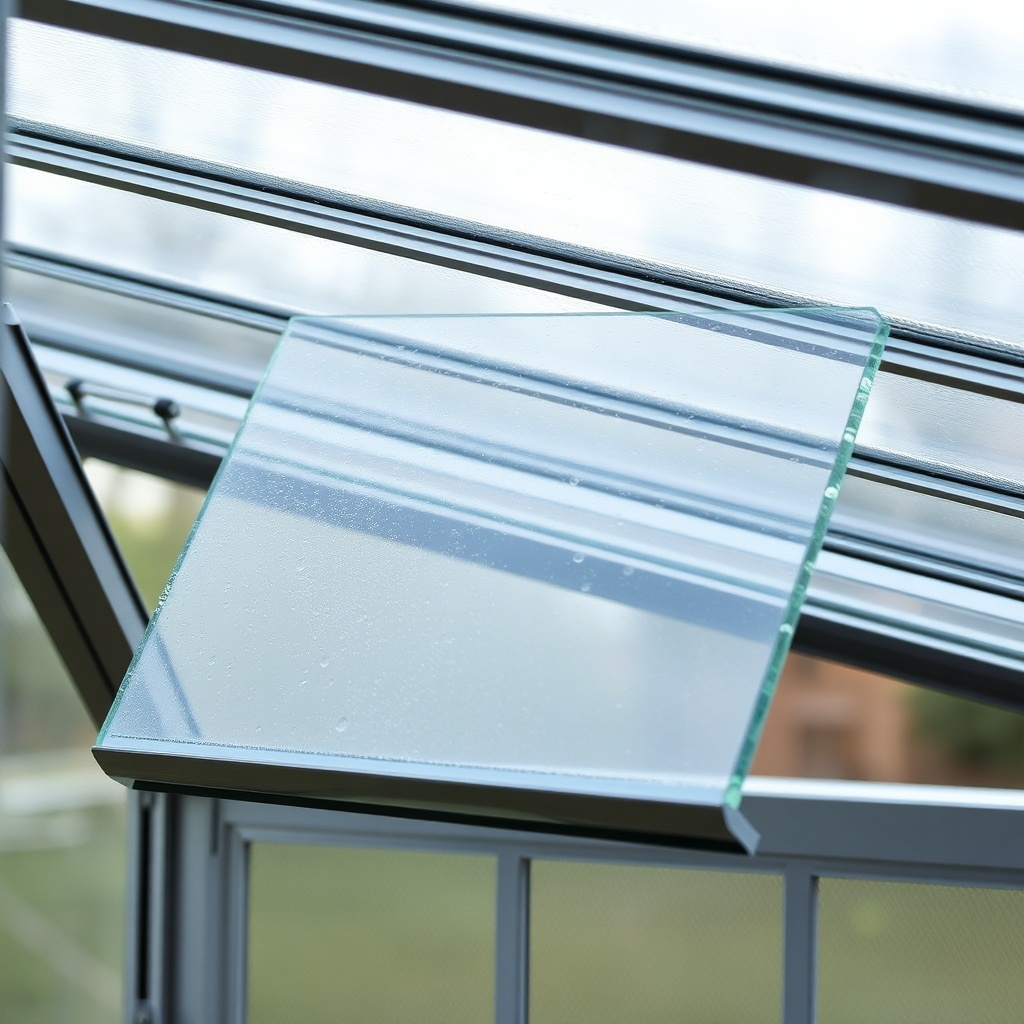
Maintenance: Polycarbonate panels should be cleaned with mild soap and water every 6–12 months to remove algae and dirt. Avoid abrasive sponges. Over 10 years, panels may show slight yellowing and reduced light transmission (by about 5–10%), but they typically last 15–20 years before needing replacement. Glass panels remain clear indefinitely if kept clean, but are more prone to breakage—replacing one glass panel (approx. £40–£60) is more expensive than a polycarbonate panel (approx. £15–£25).
Windows cleaning: Polycarbonate scratches more easily than glass (hardness rating of about 2H vs. 6H on the pencil hardness scale). Use a soft cloth and avoid commercial glass cleaners with ammonia. Glass is chemically resistant but can chip at edges if handled carelessly. Overall, polycarbonate offers lower upfront cost and easier maintenance, while glass may appeal if you value maximum light and long-term clarity over impact resistance.
Which Glazing Is More Environmentally Friendly and Recyclable for the Palram Canopia Harmony 6×8?
Polycarbonate is a thermoplastic (polycarbonate resin, typically PC-ABS blend), which can be recycled at specialized facilities. However, its production energy is higher than glass (about 1.5–2 times more CO₂ emitted per kilogram), and it is not biodegradable. Glass, made from sand, silica, and recycled cullet, has a lower manufacturing carbon footprint (approx. 1.5 kg CO₂ per kg vs. 6 kg for polycarbonate) and is 100% recyclable with no loss of quality.
For the Palram Canopia Harmony 6×8, the polycarbonate panels weigh about 12–15 kg total, compared to glass panels that would weigh 50–60 kg. The lighter weight reduces shipping emissions and makes installation easier. Polycarbonate’s longer lifespan in terms of impact resistance means fewer replacements over decades, balancing its manufacturing disadvantage.
If sustainability is a priority, glass is technically more eco-friendly in raw materials and end-of-life, but polycarbonate’s durability and insulation benefits may reduce energy use for heating—a classic trade-off. Check local recycling programs; many accept polycarbonate as #7 plastic, though not all curb recycling bins do.
What Owners Say About Glazing Performance on the Palram Canopia Harmony 6×8
Owners report that the twin-wall polycarbonate panels do a good job of mitigating temperature swings during spring and autumn. One user in zone 6 noted that the greenhouse stayed 5°F warmer than outside on a 35°F night without supplemental heat, while a glass greenhouse of the same size dropped to near-ambient temperatures. Another complaint was that initial light levels felt low for starting seeds in February, but after a few weeks, plants adapted well and there were fewer signs of leaf burn compared to a previous glass greenhouse.
Some owners who assembled the greenhouse themselves appreciated the lighter weight of polycarbonate—one reported managing the entire roof panel installation alone. A few mentioned that the panels accumulate dust quickly, so cleaning is needed to maintain light. Most agree that the trade-off for reduced heat loss and impact resistance outweighs the slight loss of light transmission, especially in colder or storm-prone regions. For assembly specifics, see Palram Canopia Harmony 6×8 Assembly: Step-by-Step Guide and Time Estimate.
Frequently Asked Questions
1. Can I replace the polycarbonate panels on my Palram Canopia Harmony 6×8 with glass later?
Yes, but it requires custom-cut glass panels (4mm single-pane tempered) and stronger support due to the extra weight. The aluminum frame is designed for polycarbonate weight, so you may need to add cross-bracing. Cost is typically £200–£350 for materials.
2. Does polycarbonate yellow over time on the Harmony 6×8?
Yes, after about 5–8 years in direct sunlight, a slight yellow tint may appear, reducing light transmission by 5–10%. The panels include UV protection, but it’s an inevitable aging process. Replace panels every 15–20 years.
3. Which glazing is better for winter growing?
Polycarbonate is better for winter due to its higher insulation (R-value ~1.8 vs glass ~0.9). The Harmony 6×8 with polycarbonate retains heat more effectively, reducing heating costs by 30–40% compared to glass.
4. How do I clean polycarbonate panels without scratching them?
Use a soft microfiber cloth or sponge with lukewarm water and mild dish soap. Do not use window cleaners with ammonia, abrasive pads, or pressure washers—these can cause permanent scratches or clouding.
5. Will glass panels make my greenhouse hotter in summer?
Yes. Glass transmits more direct light, raising interior temperatures by 8–12°F (4–7°C) above ambient on sunny days. Polycarbonate diffuses light and reduces peak temperatures, which can help avoid heat stress—plus the sliding window aids ventilation.
6. Is the Palram Canopia Harmony 6×8 available with glass as a factory option?
No, Palram only manufactures this model with twin-wall polycarbonate panels. Aftermarket glass conversion is possible but voids the warranty. If you want glass, consider other greenhouse models.