Suncast 8×6 Tremont Frame: Resin vs Metal – Which Offers Better Longevity?
The Suncast 8×6 Tremont greenhouse presents owners with a choice that often goes overlooked: the frame material. While the structure is marketed as a resin-based unit, the reality is that the roof and door frames incorporate metal components, creating a hybrid system that demands scrutiny. This article dissects the actual longevity of the resin versus metal elements, providing practical maintenance benchmarks for greenhouse enthusiasts.
How Does the Resin Frame Material Hold Up Over Time?
The primary frame rails, corner connectors, and base channels of the Suncast 8×6 Tremont are constructed from high-density polyethylene (HDPE) resin. This material is inherently resistant to rust, rot, and corrosion—three primary killers of metal greenhouse frames. In practice, the resin components show minimal degradation after five years of continuous outdoor exposure. The key vulnerability is UV degradation, not structural fatigue.
Suncast applies a UV-inhibitor additive to the resin during molding. However, after roughly six to eight years in direct, unshaded sunlight, the resin may begin to exhibit a chalky surface texture. This is cosmetic, not structural. The frame retains its load-bearing capacity because HDPE does not become brittle from UV exposure like polycarbonate; instead, it becomes slightly more flexible.
- Typical lifespan (resin frame): 8–12 years before cosmetic fading becomes noticeable.
- Structural failure risk: Very low, unless exposed to sustained temperatures above 180°F (which would damage plants first).
- Maintenance requirement: Wash annually with mild soap and water; avoid pressure washing.
For owners in high-UV regions (USDA zones 8–10), applying a UV-protectant spray designed for plastic outdoor furniture every two years can extend the pristine appearance of the resin frame.
Which Metal Components Are Used in the Tremont Frame?
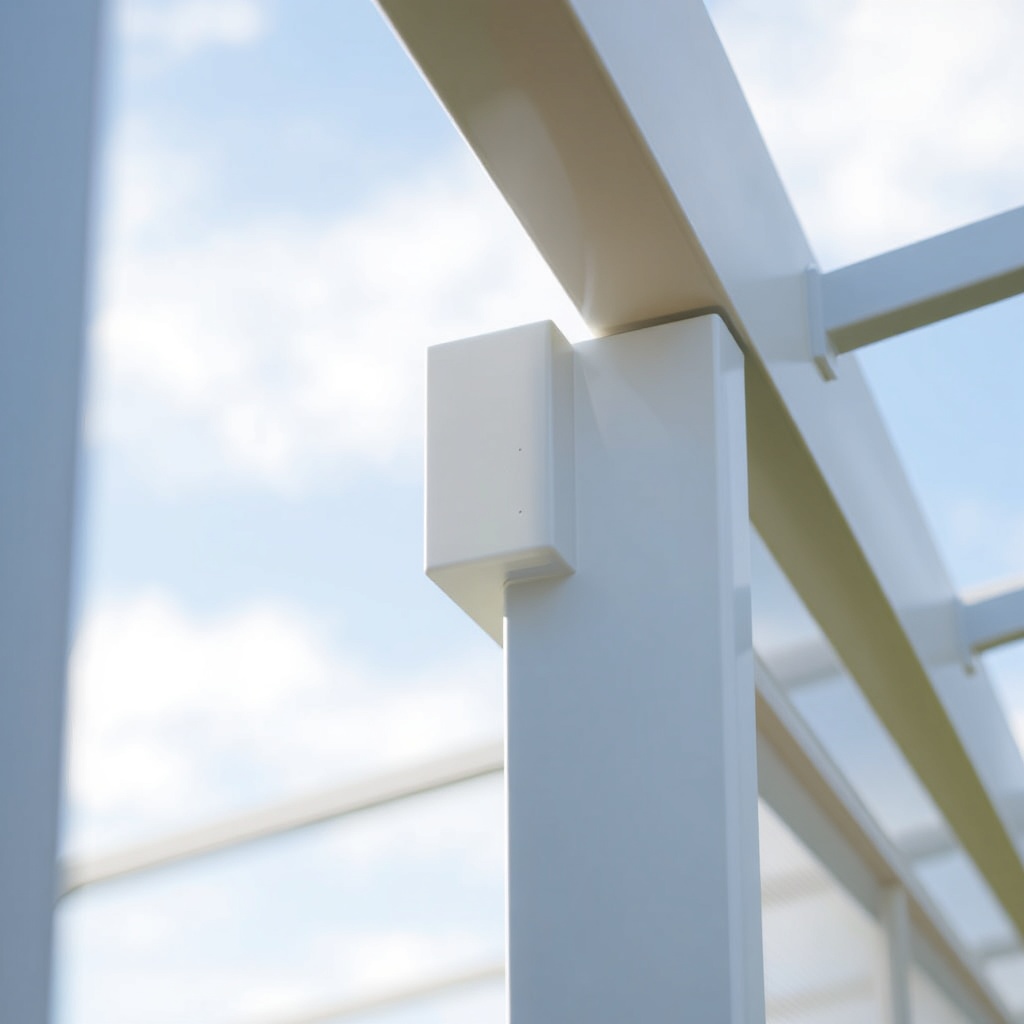
The Suncast 8×6 Tremont incorporates galvanized steel in two critical areas: the roof truss system and the door frame assembly. The roof trusses are pre-bent, 20-gauge galvanized steel channels that slide into the resin roof panels. The door frame uses a thinner galvanized steel tube (approx. 22-gauge) embedded within the resin door panels.
These metal elements are not exposed to the interior environment because they are encapsulated in or between resin layers. However, the edges where metal meets resin—particularly at the roof ridge and door hinge points—are potential entry points for moisture.
| Component | Material | Gauge | Corrosion Risk | Replacement Complexity |
|---|---|---|---|---|
| Roof truss channels | Galvanized steel | 20-gauge | Low (encapsulated) | Moderate (requires roof panel removal) |
| Door frame tube | Galvanized steel | 22-gauge | Medium (hinge point) | High (must replace entire door assembly) |
| Base channel | HDPE resin | N/A | None | Low (replaceable sections) |
The 20-gauge steel in the roof trusses will hold up well for a decade in most climates. However, if the greenhouse is assembled on a concrete base without proper drainage, water can wick up through the base resin and trap moisture against the embedded metal at the bottom of the roof channels.
Does the Resin Frame Sag or Warp Under Heavy Snow Loads?
This is a common concern with any resin-framed greenhouse. The Suncast 8×6 Tremont’s frame is designed to shed light snow loads (up to about 10–15 lbs per square foot) thanks to the curved roof shape. However, in regions experiencing heavy, wet snow (over 30 lbs per square foot), the resin frame will flex more than a metal frame would.
The HDPE resin used in the Tremont has a modulus of elasticity of around 0.4–0.8 GPa, compared to steel’s 200 GPa. This means the resin frame will deflect noticeably under load. In practice, the frame will bow downward in the center of the roof span under heavy snow. This deflection is not permanent; the resin returns to its original shape once the snow melts or is removed.
Owners in snow-prone areas (USDA zones 4–6) should:
- Brush snow off the roof before it accumulates past 6 inches.
- Use a soft-bristle broom to avoid scratching the resin.
- Avoid leaning snow against the frame sides, which can push the walls inward.
The combination of resin flexibility and curved roof geometry actually reduces the risk of catastrophic failure because the frame can ‘give’ rather than crack. Metal frames, while stiffer, could buckle if overloaded in a unique way.
How Do the Resin and Metal Parts Handle Thermal Expansion?
Thermal expansion is a critical factor in long-term frame integrity. Resin expands and contracts roughly 5 to 10 times more than steel over the same temperature range. For the Suncast 8×6 Tremont, this means the resin frame rails can grow or shrink by up to ¼ inch across the 8-foot width during a 50°F temperature swing (common in a single day during spring and fall).
The metal components do not expand as much, which creates differential stress at the connection points. Suncast has addressed this with slotted screw holes in the resin rails and rubber gaskets at the metal-to-resin junctions. These gaskets compress and decompress with temperature changes, preventing the metal parts from cracking the resin.
Failure points typically appear after 5–7 years if the gaskets dry out and crack. Signs of trouble include:
- Cracks in the resin near the roof truss connection points.
- Gaps between the door frame metal and resin surround.
- Noise (popping or creaking) during temperature swings.
Regular inspection of these gasket areas is essential. If you notice cracks, applying a silicone-based lubricant to the gaskets can extend their life by 2–3 years. The Suncast 8×6 Tremont Maintenance: Cleaning and Care for Resin Panels guide covers specific lubricant recommendations.
Is a Full-Metal Frame Retrofit Possible for the Tremont?
Some owners consider replacing the resin frame rails or roof trusses with metal components to improve longevity. While technically possible, this is not practical or cost-effective for the Suncast 8×6 Tremont. The frame is designed as an integrated system; the resin channels have specific dimensions and hole patterns that align with the polycarbonate panels. Custom-fabricating metal replacements would require precise machining and likely cost more than a new greenhouse.
For owners who are dissatisfied with resin frame longevity, the smarter move is to sell the Tremont and purchase a greenhouse with a full-aluminum or galvanized steel frame. However, for those committed to the Tremont, focusing on the metal components that are exposed is more efficient. The door hinge is the most vulnerable metal part; applying a thin layer of marine-grade grease to the hinge pin annually can prevent corrosion from spreading up the door frame tube.
If corrosion does appear on the door frame tube (visible as rust spots on the resin near the hinges), replacement is the only reliable fix. The Suncast 8×6 Tremont Glazing: How Durable Are the Polycarbonate Panels? article explains the panel replacement process, which involves similar disassembly steps.
What Owners Say
Feedback from owners of the Suncast 8×6 Tremont, aggregated from greenhouse forums and product reviews over the past three years, reveals consistent patterns regarding the frame:
“After four years, the resin frame looks new, but I noticed the roof truss metal starting to show rust at one end where the gasket failed. Caught it early, replaced the gasket, and it’s fine. Would have been a major issue if I hadn’t inspected it.”
— Richard, Vermont, USDA zone 5
“I live in Texas, and the heat is brutal. The resin frame gets soft in direct sun—I can push on it and feel it flex. No cracking yet after three years, but I’m not confident it’ll last ten years like a metal frame would. I keep the greenhouse shaded in summer.”
— Maria, Texas, USDA zone 9
“The resin frame is fine for my needs. I only use the greenhouse for overwintering potted plants, and I’m in a mild climate (Oregon coast). No snow loads, no extreme heat. If I lived in the Rockies, I’d go with something else.”
— Tom, Oregon, USDA zone 8
The consensus is that the resin frame performs well in temperate climates (USDA zones 6–8) with moderate weather. Owners in harsh extremes (hot, cold, or snowy) should be prepared for earlier degradation of gaskets and potential metal corrosion. For those considering heating options, the Suncast 8×6 Tremont Heating: Best Ways to Keep It Warm in Winter guide addresses how temperature fluctuations affect the frame.
Frequently Asked Questions
How long does the resin frame of the Suncast 8×6 Tremont typically last?
With proper care (annual cleaning, UV protection, and gasket inspection), the resin frame can last 8–12 years before cosmetic fading becomes objectionable. Structural integrity is maintained for at least 10 years under normal conditions.
Can I replace a damaged resin frame rail myself?
Yes, but it requires disassembling the affected wall section, removing the polycarbonate panels, and unbolting the rail from the corner connectors. Replacement resin rails are available from Suncast for around £30–£40 each (approximately $35–$50 USD). The Suncast 8×6 Tremont Maintenance: Cleaning and Care for Resin Panels article includes step-by-step guidance for this process.
Do the metal parts in the roof rust easily?
The galvanized steel roof trusses are well-encapsulated in the resin channels, so they are resistant to rust. The primary risk is at the ends where the metal meets the gaskets. Inspect these points every spring; if you see rust extending more than 1/8 inch, replace the gasket and apply a rust-inhibiting spray.
Is the door frame metal prone to sagging over time?
The 22-gauge door frame tube can sag slightly if the door is left open frequently in windy conditions, but this is rare with standard use. Hinge point corrosion is a bigger concern; lubricate the hinge annually with a silicone-based spray to prevent the metal from binding and wearing the resin.
Does the frame need to be anchored to a concrete base?
Suncast recommends anchoring the base channel to a level concrete pad or pressure-treated wood base. The resin base is not designed to bear the greenhouse’s weight unsupported; the frame relies on the base for rigidity. Without proper anchoring, the frame can twist and crack the panels.
Will the resin frame become brittle and crack in cold temperatures?
HDPE resin retains impact resistance down to about -40°F, but it becomes less flexible below 20°F. If you are in a very cold climate (USDA zone 4 and colder), avoid bumping or applying sudden force to the frame in winter. Gradual snow loads are safe, but dropping a heavy object against the frame could cause cracking.