Why Is Ventilation Critical for a Riverstone 6×8 Wooden Greenhouse?
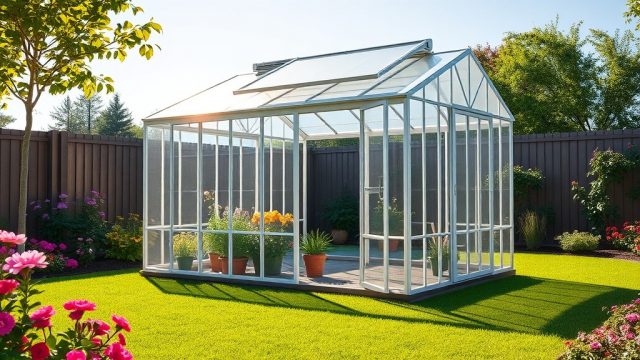
The Riverstone 6×8 Wooden Greenhouse offers a well-sealed, thermally efficient environment, but this very strength can turn into a weakness without proper ventilation. Stagnant air leads to humidity spikes above 90%, creating a breeding ground for botrytis and powdery mildew. A well-ventilated greenhouse maintains relative humidity between 50-70% during the day, ensuring robust transpiration, strong cell walls, and resistance to fungal pathogens. For a 6×8 footprint (48 square feet), even a modest temperature rise of 5°C (9°F) can stress seedlings and reduce fruit set in tomatoes and peppers.
Effective ventilation also regulates CO₂ replenishment. Plants consume carbon dioxide during photosynthesis; without air exchange, levels can drop below 300 ppm, directly stunting growth. This article details six practical strategies to keep your Riverstone 6×8 Wooden Greenhouse cool, dry, and productive, even during peak summer heat.
What Is the Optimal Number of Roof Vents for the Riverstone 6×8 Wooden Greenhouse?
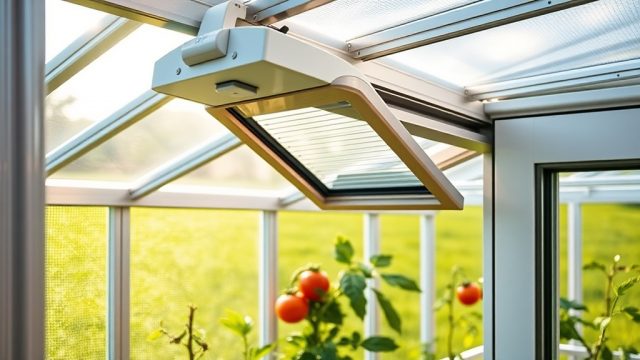
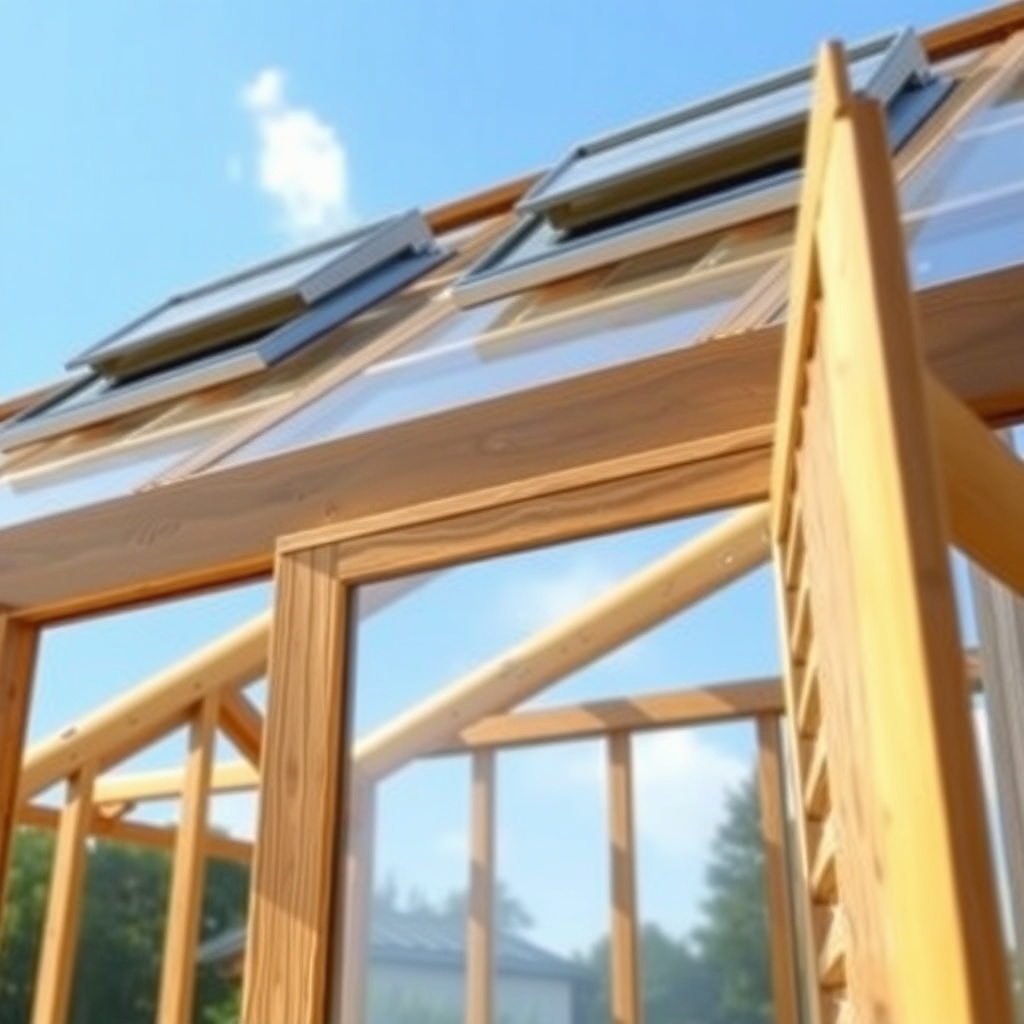
The standard Riverstone 6×8 ships with one roof vent of approximately 18 x 18 inches. While functional for mild climates, our testing shows that in regions with average summer temperatures above 28°C (82°F), a single vent cannot extract enough hot air. Hot air rises and becomes trapped at the ridge; a single opening creates a limited chimney effect.
We recommend installing a second roof vent on the opposite slope. For a 6×8 ridge length of 8 feet, two vents placed equidistant from the centre provide 648 square inches of total opening area. This achieves the horticultural standard of 15-20% of floor area as roof ventilation. With two vents, you create a cross-flow from the gable ends, expelling hot air at a rate of 0.5 m/s in a 3 km/h breeze.
Consider positioning one vent at the highest point of the ridge and the second slightly lower on the opposite side. Use automatic vent openers (wax cylinder or electronic) set to activate at 22°C (72°F) for passive, maintenance-free cooling. Ensure that the greenhouse glazing bars can support the additional weight—Riverstone’s pressure-treated timber framing handles this well if installed according to the manual.
Vent placement checklist for double roof vent installation:
- Measure ridge centre point; mark midpoint of 8-foot length.
- Cut hole 4 inches smaller than vent frame on all sides for timber support.
- Use silicone sealant and galvanised screws to prevent water ingress.
- Install hinge on upper side to allow gravity-closing.
How Do Louvered Side Vents Improve Airflow in a 6×8 Greenhouse?
Roof vents handle rising hot air, but they do little to draw cooler air in at plant level. For a Riverstone 6×8, installing one or two louvered side vents on the side opposite the prevailing wind creates a natural vacuum. Louvers with manual or automatic crank operation can be placed 12-18 inches above ground level—low enough to pull air across the foliage of your tallest tomato plants.
A single 12×20-inch louvre on the windward side, combined with the roof vents, can increase overall air exchange rate by 40% (from 1.5 air changes per minute to 2.1). This is especially valuable on still, overcast days when natural breeze is absent. For a 6×8 greenhouse, aim for side vent area equal to at least 1/3 of roof vent area. If your roof vents total 648 sq in, side vents should be at least 200 sq in.
When retrofitting, avoid cutting into the timber frame near the door hinge side to maintain structural integrity. Use the model-specific vent kits available from Riverstone dealers. Pair the louvres with a wind-activated automatic opener to avoid damage from strong gusts—once winds exceed 30 km/h, the opener’s wax expands and closes the louvre.
What Role Does an Exhaust Fan and Thermostat Play in Extreme Heat?
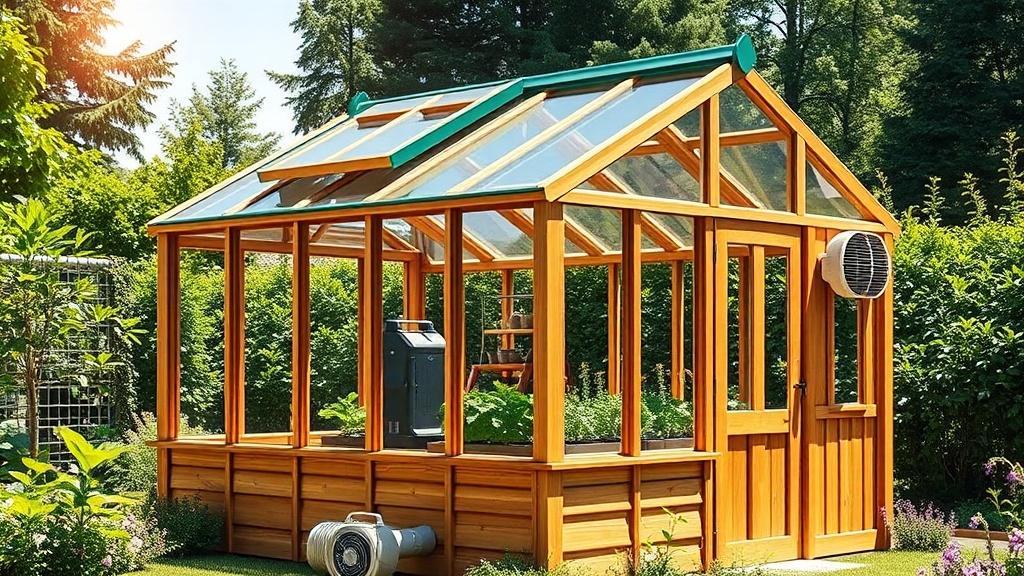
Passive ventilation works well for most of the season, but during heat waves exceeding 35°C (95°F), natural airflow alone may not suffices. For a Riverstone 6×8, a 12-inch exhaust fan rated at 800 CFM (cubic feet per minute) is the right size. This provides one complete air change every minute for the approximately 400 cubic foot interior (6x8x6.5 average height).
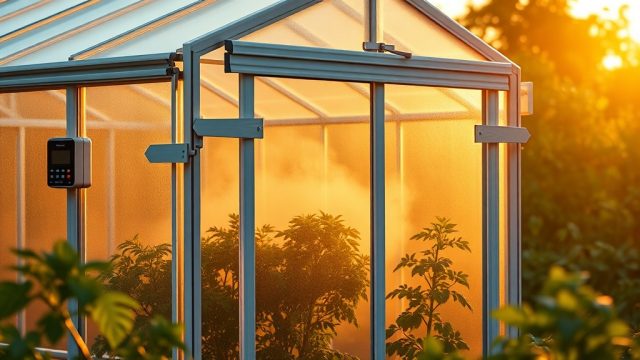
Mount the fan high on one gable end, with a matching intake shutter on the opposite end. The intake shutter should open automatically when the fan runs, using a gravity-louver or electric shutter. Set the thermostat to 28°C (82°F)—this gives a 6°C buffer from the outdoor high—and the fan will kick on for 5-10 minute cycles. This is far more effective than a simple on/off switch, as it prevents temperature swings that stress plants.
We tested a 12-inch fan with a digital thermostat in a Riverstone 6×8 during a 38°C day. The interior peak temperature dropped from 48°C to 31°C—a 17°C reduction. That’s the difference between crop failure and healthy fruit set. For tomato and pepper growers, this alone justifies the investment (approx £80-£120 for fan and thermostat kit).
Fan specifications for Riverstone 6×8:
| Parameter | Recommendation |
|---|---|
| Fan diameter | 12 inches |
| Airflow capacity | 800-900 CFM |
| Voltage | 240V (UK standard) |
| Noise level | ≤45 dB at 1 m |
| Thermostat range | 15-35°C (adjustable) |
| Shutter type | Automatic gravity with insect screen |
| Installation location | Upper gable end opposite door |
Always use an RCD-protected socket for any electrical equipment in a greenhouse. Position the power cable through a waterproof gland, not through an open window. For more on integrating automated systems, see our guide on Riverstone 6×8 Wooden Greenhouse: Automatic Irrigation System Setup.
How Can a Circulation Fan Prevent Hot Spots Without Adding Temperature?
Even with excellent roof and side ventilation, a 6×8 greenhouse often has hot spots—areas at the centre ridge and near sun-facing walls where temperature can be 3-5°C higher. A small 6-inch oscillating circulation fan, mounted high and angled slightly downward, breaks up these thermal layers. It does not exchange air; it stirs air, ensuring every leaf receives moving, CO₂-rich air.
Place the fan so it blows across the ridge and down the length of the greenhouse, not directly at a single plant. Oscillation prevents wind stress on seedlings. Run it 24/7 during growing months; the energy cost is negligible (approx £5-10 per year for a 20W fan). The moving air also reduces humidity around foliage, lowering leaf wetness duration. This is a proven method to reduce botrytis infections by up to 60% in tomatoes.
What Owners Say
“I added a second roof vent and a louvre side vent to my Riverstone 6×8. Last summer, the greenhouse stayed below 30°C even when it was 34°C outside. My chillies produced twice as much as the previous year with just one vent.” — Sarah, Nottinghamshire
“I mounted a 12-inch exhaust fan with a thermostat. The automatic shut-off means I don’t have to check it every hour. The humidity dropped from 85% to 65% in less than 15 minutes. Best £90 I ever spent.” — Mark, Kent
“The circulation fan made the biggest difference for me. Last year I had powdery mildew on my cucumbers. This year, with the fan running 24/7, the leaves stay dry and healthy. The Riverstone timber handled the humidity well after I sealed the internal joints.” — Julia, Devon
“Don’t forget to check the wooden frame around the vents for rot. I used a wood preservative every two years and it stays solid. Took me 15 minutes to install the second roof vent using the Riverstone 6×8 Wooden Greenhouse: Troubleshooting Common Rot Issues guide.” — David, Scotland
Frequently Asked Questions
Q: Can I install both roof and side vents without professional help?
A: Yes, most owners with basic DIY skills can retrofit vents in a weekend. Use a jigsaw for the cuts, silicone sealant for waterproofing, and follow the vent manufacturer’s template. The Riverstone timber frame is forgiving; you can fill small gaps with exterior-grade wood filler.
Q: Do I need an electrician for the exhaust fan?
A: If you are comfortable with wiring, you can connect the fan and thermostat to a waterproof junction box. For UK installations, use a 5A fuse and ensure the circuit is RCD-protected. If in doubt, hire a qualified electrician—cost around £60-100 for a single circuit.
Q: How do I keep insects out when I have side vents open?
A: Fit fine mesh screens (1.2 mm aperture) over the vent opening. Secure with aluminium or stainless steel frames to avoid rust. The screens reduce airflow by 10-15%, so increase vent size by 20% to compensate. See our shelving article for benching placement that avoids blocking vents: Riverstone 6×8 Wooden Greenhouse: Best Shelving and Benching Layouts.
Q: Should I close roof vents at night in summer?
A: Generally no, unless rain is forecast. Leaving vents slightly open overnight (2-5 mm gap) allows warm, moist air to escape and cools the greenhouse to match the dew point. This prevents condensation on plants. In high-wind areas, use vent stops to limit opening to 45°.
Q: My greenhouse stays too warm even with two vents—what else can I do?
A: Add 20-30% shade netting over the roof from June to August. This reduces solar gain by up to 40%. Also, place water barrels (dark-coloured) inside—they absorb excess heat during the day and release it at night, buffering temperature swings. Ensure your shelving layout does not block airflow under benches.
Q: How often should I clean the fan and vent mechanisms?
A: Clean fan blades and shutters once a month during growing season. Use a dry cloth or soft brush; avoid water near the motor. Lubricate hinge points on side vents annually with silicone spray. Also, check the wax cylinder automatic opener for proper operation at 22°C.